
Food & Nutrition Guides
Nepali Achar Types Compared: Which Pickle for Which Meal
Walk into any Nepali kitchen and you will find three or four jars of achar lined up, each one meant for a different mood and a different plate. This guide breaks down the major types (gundruk, lapsi, mango, akabare, mixed) so you know exactly which one to reach for tonight.
By Bishnu Koirala · Founder & CEO
Published
On this page
| Flavour Profile | Best Paired With | |
|---|---|---|
| Gundruk Achar | Sour, funky, deeply fermented | Plain dal bhat, sukuti sadeko, a cold winter night |
| Sweet Lapsi Achar | Tangy-sweet, chewy, a little sticky | Tea-time snacking, kids' tiffin, road trips |
| Hot Lapsi Achar | Sour-spicy, tamarind-like sharpness | Momo, thukpa, fried rice that needs a kick |
| Mango Pickle | Sweet-tart, oily, the classic thali pickle | Dal bhat, paratha, plain roti |
| Akabare Khursani Achar | Fiery, built on tiny round cherry peppers | Momo, choila, anything that needs real heat |
| Mixed Pickle | Balanced, mild-to-medium, a bit of everything | Everyday dal bhat when you can't decide |
| Buff Achar | Spicy, meaty, rich and savoury | Raksi sessions, leftover bhoj plates, beer snacks |
Achar Is Not Just "Pickle"
In English, achar gets flattened into "pickle," and that undersells it. An Indian pickle is usually one vegetable steeped in oil and spice for months. A Nepali achar can be that, but it can also be a fresh salad-style relish made the same afternoon, a fermented green that took two weeks to sour, or a dried-meat condiment eaten with beer.
If you grew up on dal bhat, achar was never optional. It's the thing that turns a plain plate of rice and lentils into a meal you actually look forward to. If you want the fuller Nepali-versus-Indian breakdown, we cover it in our Nepali and Indian pickle achar guide.
This post focuses on four Nepali staples, gundruk, lapsi, mango, and akabare, plus two you'll want on the shelf once you start cooking regularly: mixed pickle and buff achar. All of it lives in our pickles & achar section, and if you're new to Danphe altogether, our Nepali and Indian grocery delivery across Canada page explains how shipping works to your province.
Gundruk Achar: The Fermented Classic
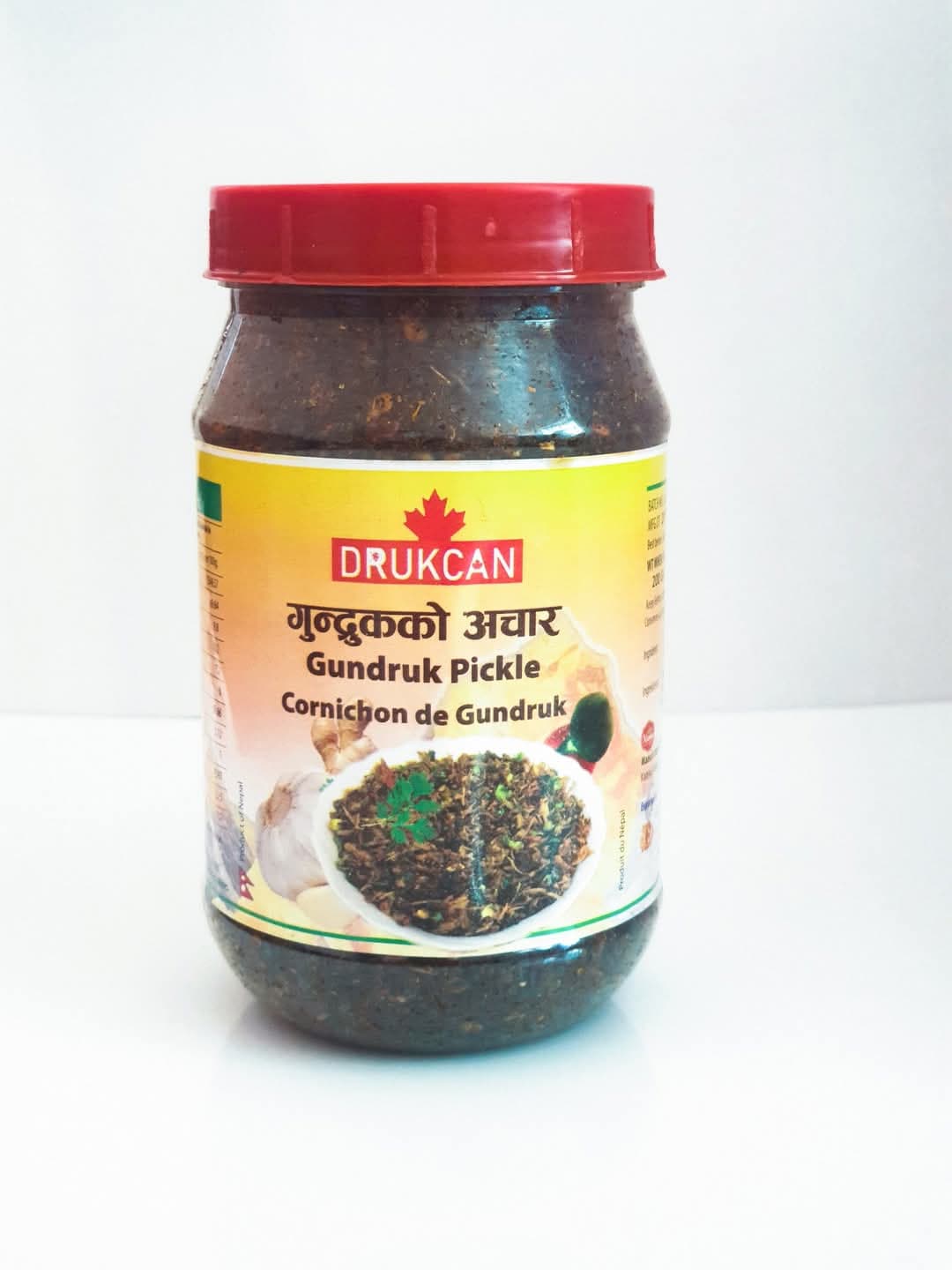
Gundruk is dried, fermented leafy greens (mustard, radish, or cauliflower leaves), and it's one of the oldest preservation foods in the hills of Nepal. On its own it's usually cooked into a soup, but as an achar it's soaked, chopped fine, and mixed with mustard oil, garlic, and chili until it turns into something sharp, sour, and slightly funky in the best way.
Our Gundruk Achar is the ready-made version: no weeks of drying required, just open the jar. It's the one to reach for with a very plain meal, think steamed rice, a thin dal, maybe some sukuti sadeko on the side, where you want something loud and acidic to wake the whole plate up.
If gundruk is new to you, our dedicated gundruk buying and cooking guide covers the soup side of things, and gundruk vs sinki explains how it differs from its fermented-radish cousin.
Lapsi Achar: Nepal's Tangy Hog-Plum Pickle
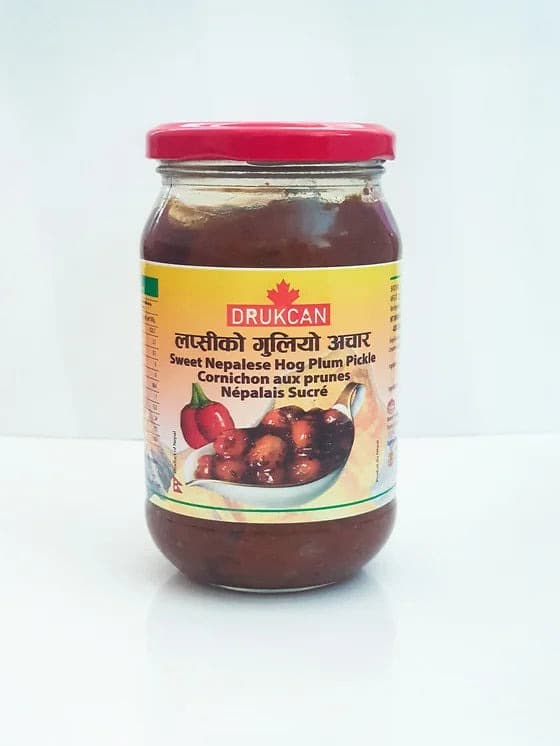
Lapsi is the Nepali hog plum, a small sour fruit that gets boiled, mashed, and turned into everything from candy to pickle. As an achar it comes in two moods. Our Sweet Lapsi Achar is tangy with a sugar-forward finish, closer to a fruit chutney, great for snacking straight out of the jar or packing in a lunchbox.
The Hot Lapsi Achar is the sharper sibling: sour and chili-forward with almost a tamarind-like bite. This is the one I keep next to momo at home, because plain momo achar never has quite enough tang, and a spoonful of hot lapsi fixes that instantly.
For the full story on this fruit, from raw lapsi to titaura candy, read our lapsi hog plum guide.
Mango and Mixed Achar: The Everyday Table Companions
Mango pickle is the one dish that's genuinely shared across Nepali and Indian tables, and for good reason. Our Mango Pickle is oily, tart, and just sweet enough, the kind of achar that goes with almost anything: rice, roti, even a grilled cheese sandwich if you're being unconventional about it.
When you can't decide, or you're feeding a table where tastes differ, Mixed Pickle is the safe, crowd-pleasing choice. It blends several vegetables at a gentler heat level than a straight akabare achar, so it works for kids and heat-sensitive eaters without tasting bland.
Both pair naturally with a bowl of rajma chawal or a simple nepali dal, and both are shelf-stable enough to keep in the pantry for months once opened and refrigerated.
Akabare Khursani: When You Want Real Heat
Akabare khursani is a small, round, intensely hot pepper grown in Nepal, closer in shape to a cherry tomato than a typical chili. Whole, it's a condiment on its own; pickled, it becomes Akabare Khursani Achar, which is genuinely one of the spiciest jars on our shelf.
This is the achar for choila nights, for sukuti platters, and for anyone who thinks mango pickle is a bit too polite. Start with a small spoonful stirred into rice before you commit a full serving; it builds heat fast.
Curious about the pepper itself, where it's grown and how hot it actually is compared to other chilies? Our akabare khursani guide goes deep on that.
Building an Achar Shelf That Covers Every Meal
If you're stocking a Nepali pantry from scratch, you don't need all seven jars on day one. Start with one sour (gundruk or hot lapsi), one sweet-tart (mango or sweet lapsi), and one heat-forward option (akabare). That covers dal bhat, momo, and snacking in one small shelf.
For meat eaters, Buff Achar deserves a spot too. It's a spiced dried-meat pickle, rich and savoury, more of a snack-with-drinks item than a daily dal bhat companion, but it disappears fast once it's opened.
Everything here ships from our Vancouver store to all ten provinces and three territories, standard delivery in 5-10 business days, free over $35 within central Metro Vancouver. If achar is the gateway, dal bhat and aloo ko achar are natural next stops for building out the rest of the meal.

Frequently asked questions
What's the real difference between Nepali achar and Indian pickle?
Indian pickle (achaar in Hindi) is almost always oil-cured and aged for weeks or months. Nepali achar covers that same style but also includes fresh, salad-style relishes made the same day (like aloo ko achar) and fermented items like gundruk that have nothing to do with oil-curing. We break this down fully in our Nepali vs Indian groceries guide.
Which achar goes best with momo?
Hot Lapsi Achar or Akabare Khursani Achar are the two most traditional pairings, both sour and spicy enough to cut through the richness of the filling. If you're making momo at home, keep at least one of these on hand alongside your momo masala.
Is gundruk achar spicy?
It has some heat from added chili and garlic, but the dominant flavour is sour and fermented, not fiery. If you want serious heat, reach for the Akabare Khursani Achar instead.
How long does an opened jar of achar last?
Most oil-based achar (mango, mixed, lapsi) keeps for several weeks refrigerated after opening, since the oil and salt act as natural preservatives. Once opened, always use a clean, dry spoon to avoid introducing moisture that can spoil the batch faster.
What's the mildest achar to start with?
Mixed Pickle is the gentlest of the group, blending several vegetables at a moderate heat level. Sweet Lapsi Achar is also a safe, kid-friendly entry point since the sweetness balances the tang.
Can achar be used as an ingredient, not just a side condiment?
Yes. A spoonful of mango or mixed pickle stirred into plain rice or even fried rice adds instant flavour, and some cooks use the oil from the jar to season vegetables. Hot lapsi achar also works well thinned slightly and used as a dipping sauce for thukpa or noodle dishes.
Shop the pantry
Authentic Himalayan staples, delivered anywhere in Canada.
Keep reading
Nepali & Indian Grocery Delivery Across Canada
One Vancouver shop, one nationwide delivery run: real Nepali and Indian groceries shipped coast to coast.
Read the guideIndian & Nepali Pickles (Achar): Mango, Lemon, Mixed
No dal bhat plate is complete without a spoonful of achar, and this is the guide to picking the right jar.
Read the guideGundruk: Buying & Cooking Nepal's Fermented Greens
Nepal's tangy fermented greens, explained: what to buy, how to rehydrate it, and two ways to turn it into dinner.
Read the guideLapsi (Nepali Hog Plum): Achar, Candy & Powder
Nepal's favourite sour-tangy fruit, sold as achar, candy and powder, shipped anywhere in Canada.
Read the guide