
Food & Nutrition Guides
Gundruk vs Sinki: Two Nepali Fermented Foods
Every Nepali kitchen has a jar of something sour tucked in the back of the pantry. Gundruk and sinki are the two pillars of that tradition: one made from mustard greens, one from radish. They taste like cousins but they are not the same thing, and knowing the difference changes how you cook, store, and shop for them.
By Bishnu Koirala · Founder & CEO
Published
On this page
| Gundruk | Sinki | |
|---|---|---|
| Made from | Mustard greens, radish leaves, cauliflower leaves, or spinach | Radish root (mula), sometimes with a bit of turnip |
| Fermentation time | 3 to 7 days, sun-dried after | 15 to 20 days in a warm, sealed pot before drying |
| Texture when dried | Light, papery, shreds easily | Denser, chewier, holds its shape |
| Flavour | Sharp, tangy, slightly bitter undertone from the greens | Sourer and earthier, closer to a fermented daikon |
| Classic dish | Gundruk ko jhol (fermented greens soup) with beans or potato | Sinki ko achar or sinki jhol, often cooked with tomato and timur |
| Origin region | Hills across Nepal, especially common in household drying racks | Traditionally a specialty of eastern hill districts like Ilam and Panchthar |
| Shelf life dried | 6 to 12 months in an airtight container | 6 to 12 months, similarly shelf-stable once fully dried |
| Easiest to find in Canada | Widely stocked, including ready-made achar versions | Harder to find fresh, usually eaten as part of a mixed radish pickle |
What Gundruk and Sinki Actually Are
Gundruk is fermented, sun-dried leafy greens: mustard greens, radish leaves, cauliflower leaves, even spinach when that is what the garden gave you that week. Sinki is fermented radish root, the actual mula, not the leaves. Both come out of the same instinct: when there is a glut of vegetables in the hills and no refrigeration, you salt or simply pack them tight, let lactic acid bacteria take over, and dry the result into something that lasts through the winter.
If you grew up eating dal bhat in the hills of Nepal, chances are gundruk showed up more often than sinki, simply because greens were more abundant than surplus radish. But in the eastern hill districts, sinki has its own strong following, and a well-made sinki ko achar can out-sour even the tangiest gundruk.
Both belong to the same pickled and fermented food family we cover in our broader Nepali & Indian pickles (achar) guide, and both show up regularly in the boxes we pack for nationwide grocery delivery across Canada.
How Gundruk Is Made: The Leafy Greens Ferment
Fresh mustard greens or radish leaves are wilted slightly in the sun, then packed tightly into a clay pot or bamboo basket, sometimes with a splash of the water they were washed in. No salt is strictly required, the greens ferment on their own lactic acid over three to seven days in a warm spot. Once sour, the mass is spread out and sun-dried until it turns dark green-brown and brittle.
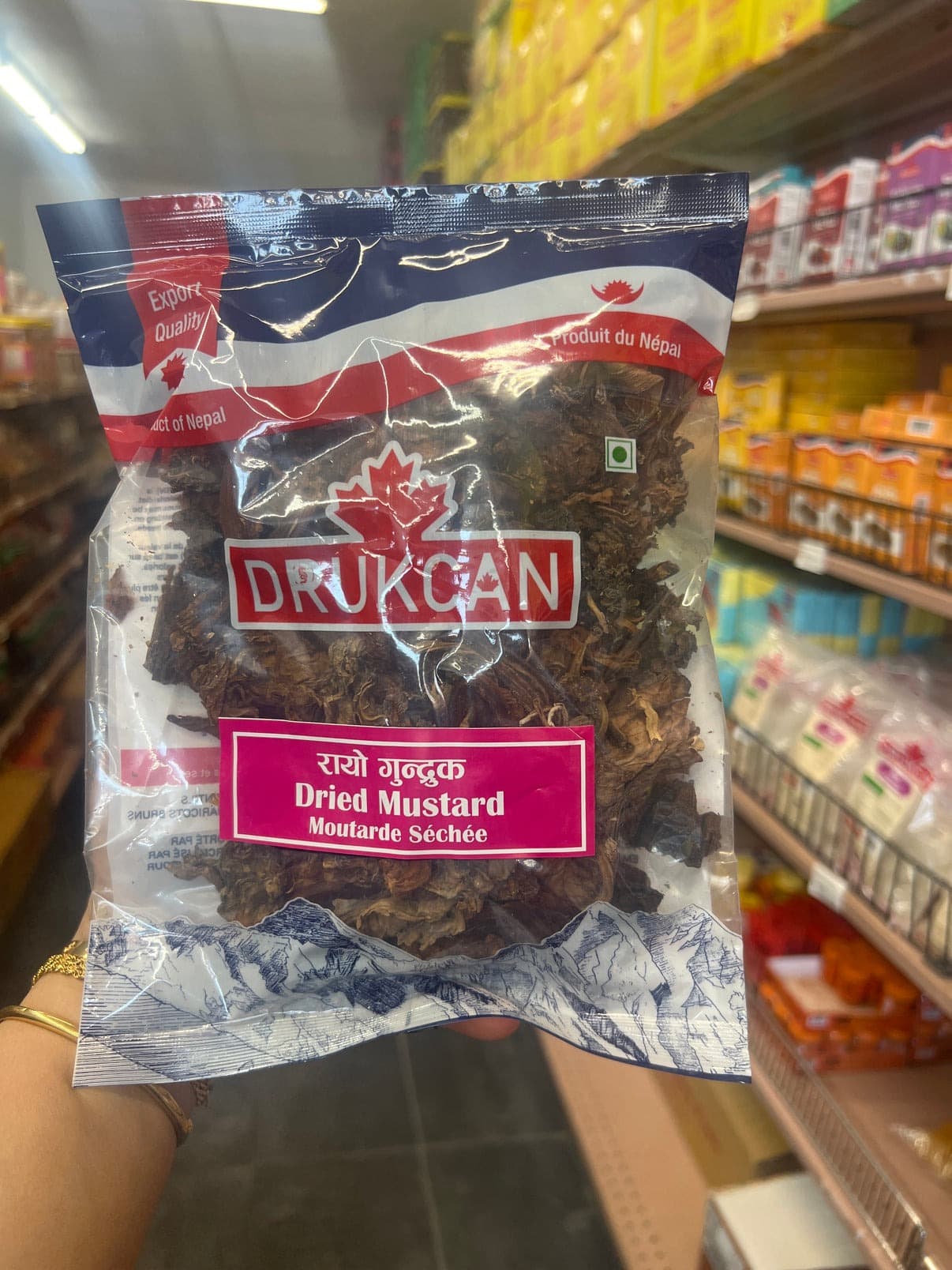
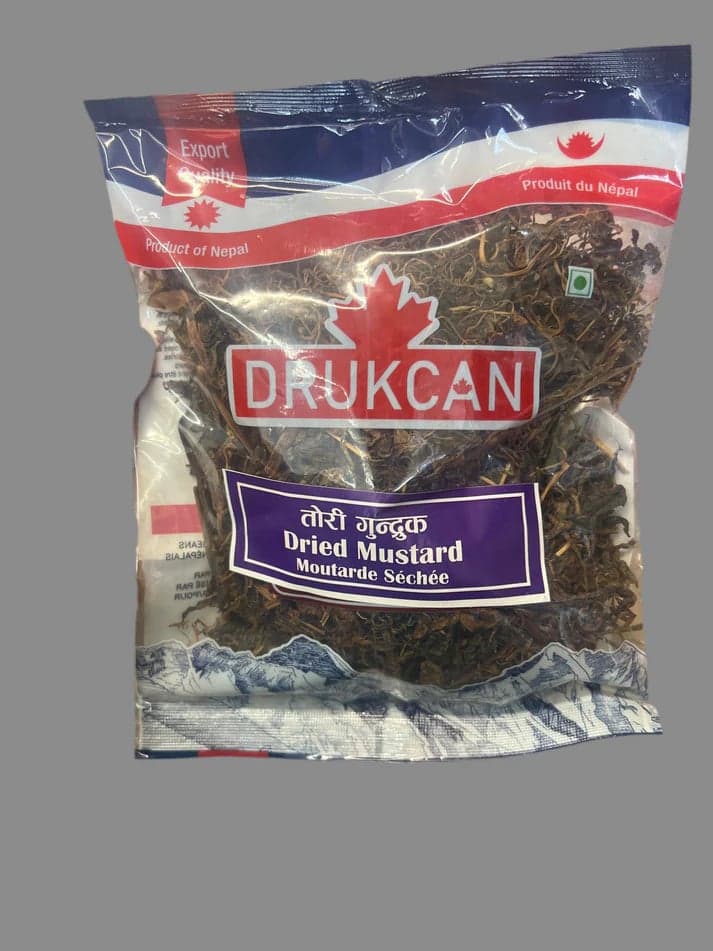
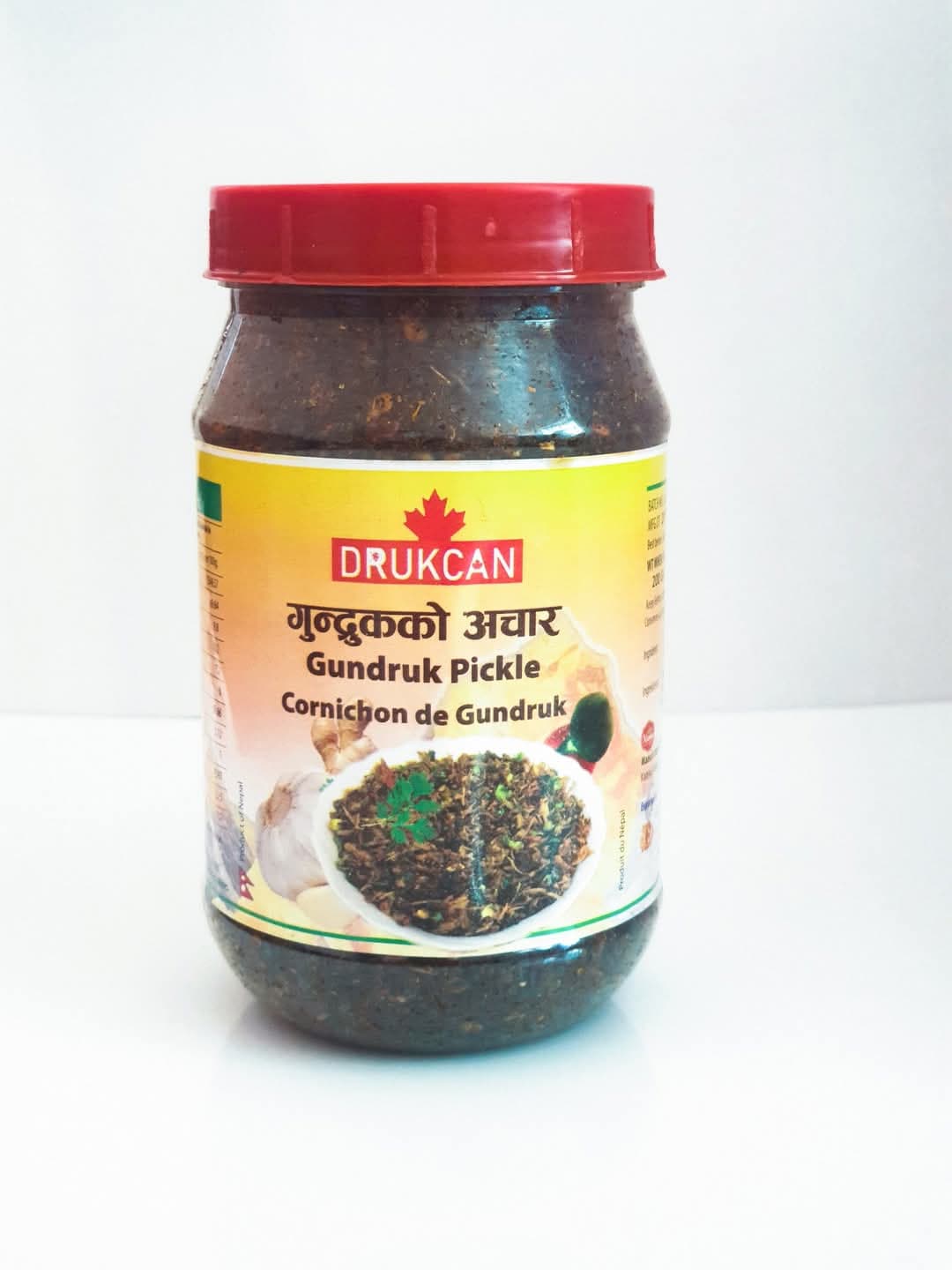
The dried product is what you will find in a packet of Dried Gundruk (Mustard Greens) or Tori Gundruk, tori simply referring to the mustard-plant variety used. Rehydrate it in warm water for ten minutes and it is ready to go into soup. If you would rather skip the soaking step entirely, a jar of ready-made Gundruk Achar gives you the same sour flavour already cooked down into a pickle.
For a full walkthrough on soaking times, sourcing, and cooking methods, our dedicated gundruk buying and cooking guide goes deeper than we can here.
How Sinki Is Made: The Radish Root Ferment
Sinki takes longer and works differently. Whole or roughly cut radish roots are packed into an underground pit or a sealed pot, sometimes buried, and left to ferment anaerobically for fifteen to twenty days. That longer, oxygen-starved ferment is why sinki tastes deeper and more sour than gundruk, closer to a fermented daikon than to a leafy green.
Once fermented, the radish is dried in the sun until it shrinks and toughens, holding its shape rather than shredding apart the way gundruk does. It is then simmered into sinki jhol or turned into a spicy achar with tomato, garlic, and timur.
Fresh sinki is genuinely hard to find outside Nepal's eastern hills, even within Nepal. What you will find shipped to Canada is usually radish worked into a ready pickle, like our Radish Pickle (Mula), which gives you that same sour radish character in a jar, no fermenting pit required. If you want to try making a version at home, our sinki ko achar recipe walks through a stovetop-friendly approach.
Flavour, Texture, and How to Cook Each
Gundruk is sharper and slightly bitter, with a texture that falls apart into soft shreds once rehydrated. It wants to be simmered into a soup, gundruk ko jhol, with black-eyed beans or potato, a spoon of mustard oil, and a handful of tomato. It also works dry-roasted with garlic and chili as a side dish alongside rice and lentils.
Sinki is sourer, earthier, and firmer. It holds up better to longer cooking, which is why it often ends up simmered slowly with tomato, garlic, and a pinch of timur for that signature Himalayan tingle, or turned into a fiery achar eaten alongside dal bhat.
If you are trying to decide which one to keep in the pantry, our broader Nepali achar types compared guide lines up gundruk, sinki, and half a dozen other pickles side by side so you can pick based on how you actually cook.
Nutrition, Storage, and Buying Tips
Both are fermented, which means both carry natural probiotics along with a real dose of iron, calcium, and fibre, a big reason gundruk has long been considered a health food in the hills, not just a flavour booster. We break down the specifics in our gundruk nutrition and benefits guide.
Store dried gundruk or a sealed pickle jar in a cool, dry cupboard, away from direct sun, and it will easily keep for six to twelve months unopened. Once opened, keep pickled versions refrigerated and use a dry spoon every time so moisture does not shorten the shelf life.
When you are stocking up, it is worth grabbing gundruk alongside other pantry basics from our spices & masala and pickles (achar) sections in the same order, since they ship together in one box anyway.
Frequently asked questions
Is gundruk the same as sinki?
No. Gundruk is made from fermented leafy greens like mustard or radish leaves, while sinki is made from the fermented radish root itself. They share the same sour, lactic-fermented family but come from different parts of the plant and taste noticeably different.
Which one is spicier or more sour, gundruk or sinki?
Sinki is generally more sour because it ferments longer, fifteen to twenty days versus gundruk's three to seven. Neither is inherently spicy on its own, the heat comes from how you cook it, usually with chili, garlic, and timur added afterward.
Can I substitute gundruk for sinki in a recipe?
You can in a pinch, since both bring a similar sour, fermented backbone to soups and achar, but the texture will be different. Gundruk shreds soft once rehydrated while sinki stays firmer, so a dish built around sinki's chew, like a slow-simmered achar, will feel different made with gundruk instead.
Where can I buy gundruk or sinki in Canada?
Danphe Stores stocks dried gundruk and gundruk achar year-round, along with a radish pickle that captures sinki's sour profile in ready-to-eat form. Everything ships from our Vancouver shop to all ten provinces and three territories, with free delivery from $35 within central Metro Vancouver.
Do I need to soak dried gundruk before cooking?
Yes, soak dried gundruk in warm water for about ten minutes until it softens, then squeeze out the excess water before adding it to soup or a dry side dish. Our gundruk ko jhol recipe has the full method with exact timing.
Is fermented radish (sinki) healthy?
Yes. Like gundruk, sinki is naturally fermented, which means it carries beneficial bacteria along with the fibre and minerals already present in radish. It is traditionally eaten in small portions alongside dal bhat rather than as a main dish, which fits how nutrient-dense fermented foods are usually enjoyed.
Shop the pantry
Authentic Himalayan staples, delivered anywhere in Canada.
Keep reading
Nepali & Indian Grocery Delivery Across Canada
One Vancouver shop, one nationwide delivery run: real Nepali and Indian groceries shipped coast to coast.
Read the guideGundruk: Buying & Cooking Nepal's Fermented Greens
Nepal's tangy fermented greens, explained: what to buy, how to rehydrate it, and two ways to turn it into dinner.
Read the guideGundruk ko Jhol Recipe: Fermented Greens Soup
A sour, warming bowl of fermented gundruk simmered with potato and tomato, the way Nepali kitchens have made it for generations.
Read the recipeSinki ko Achar Recipe: Fermented Radish Pickle
Sour, smoky, tempered in mustard oil and timur: sinki ko achar is the hill-country pickle that makes a plain plate of dal bhat sing.
Read the recipe