
Food & Nutrition Guides
Akabare Khursani: Nepal's Fiery Cherry Pepper
If you've ever bitten into a small, round green or red chilli at a Nepali table and immediately reached for water, you've met akabare khursani. Also called dalle khursani, this cherry-shaped pepper is one of Nepal's most loved and most feared ingredients, and it's the backbone of the achar jars that show up on every dining table back home.
By Bishnu Koirala · Founder & CEO
Published

On this page
What exactly is akabare khursani?
Akabare khursani (also written dalle khursani) is a small, round chilli grown across the hills of Nepal, from Ilam in the east to the mid-hill terraces near Pokhara. Unlike the long, tapered chillies used in most Indian cooking, akabare is compact and almost berry-like, which is exactly why English speakers call it the 'cherry pepper'.
It ripens from deep green to a bright orange-red, and both stages get used in the kitchen. Green akabare is sharper and more vegetal, while the ripe red version leans sweeter before the heat catches up with you. Either way, this is not a chilli you toss into a dish absentmindedly.
How hot is it, really?
Akabare khursani sits well above a jalapeno and comfortably into habanero territory on the Scoville scale, often estimated in the 100,000 to 350,000+ SHU range depending on the batch, soil, and how ripe the pods are when picked. That's serious heat packed into something the size of a large pea.
In our own family kitchens, a single fresh dalle chopped into a bowl of dal is enough to make everyone at the table reach for extra bhat (rice). If you're used to milder pickles-achar, start with a small spoon of any akabare product and build up from there. There's no shame in going slow with this one.
How Nepalis actually use akabare khursani
The most common form you'll meet is achar: whole or crushed akabare fermented or pickled with mustard oil, garlic, and salt, sometimes with timur (Nepali sichuan pepper) added for a numbing edge. A spoonful next to a plate of dal bhat turns a simple meal into something you remember.
Fresh dalle is also crushed straight into achar sadeko-style dishes, dropped whole into soups and stews for background heat, or fried briefly in mustard oil until it blisters and mellows slightly. Home cooks in the hills sun-dry extra pods at the end of the season, then grind them into a fierce home-style chilli powder for the months when fresh dalle isn't around.
Newer snack brands have even put the flavour into potato chips, which is a genuinely fun way to introduce someone to akabare's punch without committing to a whole jar of pickle.
Buying and storing akabare products in Canada
Fresh akabare khursani doesn't travel well and isn't something we can ship, but the preserved forms capture the flavour beautifully and keep for months. Our Akabare Khursani Achar is the closest thing to what most households keep in the fridge door back in Nepal: whole cherry chillies pickled in oil, ready to spoon onto anything.
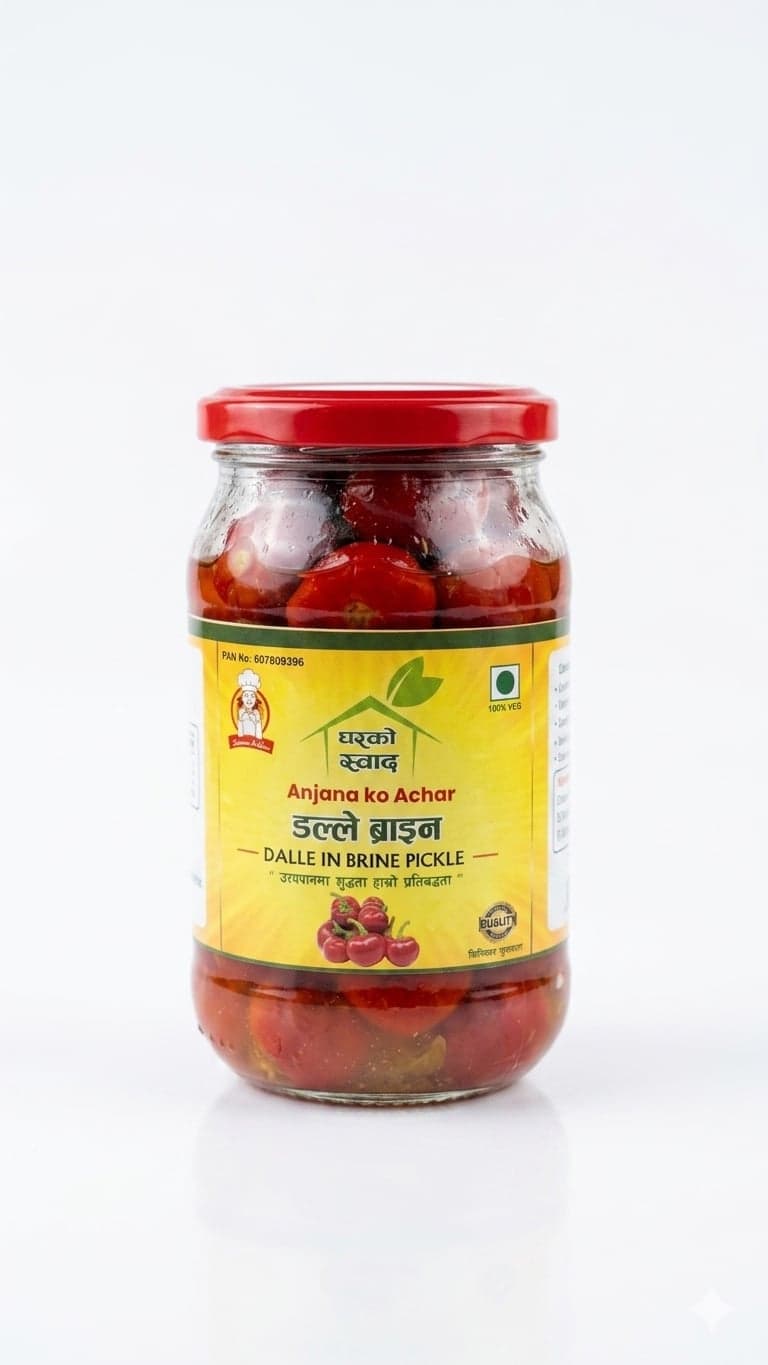
If you want the chilli suspended simply in salt brine with minimal processing, Dalle in Brine is the more rustic option, closer to how many families preserve their own harvest at home. For a garlicky, more aggressive jar, the Hot Chili Garlic Akabare Pickle pairs well with fried rice, momo, or grilled meat.
Once opened, keep any akabare achar in the fridge and always use a clean, dry spoon. The oil layer on top acts as a natural seal, so resist the urge to shake it all together; just dig underneath when you serve it and let the oil settle back on top.
Beyond the jar: paste, powder, and chips
If you cook rather than just condiment your plate, the Hot Chilli Akabare Paste is worth keeping in the fridge. A teaspoon stirred into a vegetable curry or a bowl of instant noodles does the work of three fresh chillies without any chopping.
For everyday cooking heat that isn't specifically akabare but shares that same aggressive edge, our Extra Hot Chilli Powder is a pantry staple alongside your other spices and masala. And if you just want a snack that carries the flavour without the fire commitment of a full jar, KWIK's Akabare Potato Chips deliver a surprisingly faithful hit of that cherry-chilli tang in chip form.
All of these sit in the same family as the wider world of Nepali and Indian pickles, so if akabare turns out to be too much heat for your table, there are gentler achar options in the same aisle.
Pairing akabare with the rest of your pantry
Akabare achar earns its keep next to almost anything plain: a bowl of basmati rice, a plate of dal, fried eggs, or leftover thukpa. It also does heroic work cutting through richer dishes like a gundruk soup or a heavy meat curry.
If chilli heat is your thing generally, it's worth exploring how akabare compares to other Nepali preserved flavours in our Nepali achar types compared guide, which breaks down which pickle suits which meal.
Frequently asked questions
Is akabare khursani the same as dalle khursani?
Yes. Akabare and dalle are two common names for the same small, round Nepali chilli, sometimes also called the cherry pepper in English. You'll see both names used interchangeably on jars and menus.
How spicy is akabare khursani compared to a jalapeno?
Considerably spicier. A jalapeno usually sits around 2,500 to 8,000 Scoville heat units, while akabare khursani is generally estimated well into habanero range, often 100,000 SHU or higher. Treat it with respect the first time you try it.
Can I buy fresh akabare khursani shipped across Canada?
Fresh chillies don't ship well over long distances, so we focus on preserved forms instead: achar, paste, and pickle, all of which keep their heat and flavour for months in the fridge. Our Akabare Khursani Achar is the closest everyday substitute for fresh dalle.
What's the difference between akabare achar and regular Nepali pickle?
Regular achar can be made from mango, lemon, radish, or dozens of other bases with mild to medium heat. Akabare achar is specifically built around the cherry chilli itself, so it's noticeably hotter and more concentrated than something like a mango or lemon pickle.
How do I tone down akabare achar if it's too spicy for me?
Use it sparingly at first, a quarter teaspoon stirred through a full plate of rice and dal rather than a spoonful eaten on its own. Pairing it with plain basmati rice, yogurt, or ghee-heavy dishes also helps balance the heat.
Do you deliver akabare products outside British Columbia?
Yes. Danphe Stores ships to all 10 provinces and 3 territories in Canada, with standard delivery in 5 to 10 business days and free shipping on orders over $35 within central Metro Vancouver. See our full Nepali and Indian grocery delivery across Canada page for details on rates and timing in your area.
Shop the pantry
Authentic Himalayan staples, delivered anywhere in Canada.
Keep reading
Nepali & Indian Grocery Delivery Across Canada
One Vancouver shop, one nationwide delivery run: real Nepali and Indian groceries shipped coast to coast.
Read the guideIndian & Nepali Pickles (Achar): Mango, Lemon, Mixed
No dal bhat plate is complete without a spoonful of achar, and this is the guide to picking the right jar.
Read the guideNepali Achar Types Compared: Which Pickle for Which Meal
Every jar of achar has a job: this is the guide to picking the right one for dal bhat, momo, or a lonely bowl of rice.
Read the guideTimur (Sichuan Pepper): The Zingy Nepali Spice
The tongue-tingling Himalayan spice behind every good achar and momo dip, explained and delivered anywhere in Canada.
Read the guide