
Food & Nutrition Guides
Gundruk: Buying & Cooking Nepal's Fermented Greens
Gundruk is the sour, funky, deeply savoury fermented green that shows up in almost every Nepali household's kitchen. This guide covers what it actually is, which jar or packet to buy in Canada, and how to turn dried gundruk into jhol (soup) or sadeko (salad) at home.
By Bishnu Koirala · Founder & CEO
Published
On this page
What Exactly Is Gundruk?
Gundruk is leafy greens (mustard leaves, radish greens, or cauliflower leaves) that have been wilted, packed tight, and left to ferment for several days before being sun-dried. The result is a dark, tangy, umami-loaded ingredient that tastes nothing like fresh saag. Think of it as Nepal's answer to sauerkraut, but built for the hills where fresh vegetables didn't keep through winter.
It's one of the oldest preservation foods in the Nepali kitchen. Families in the mid-hills still make it every autumn, drying batches on rooftops before the rains stop and the sun gets scarce. If you grew up in Nepal, the smell alone is nostalgia in a bag.
For a broader sense of where gundruk fits among Nepal's other fermented staples, our Nepali cuisine guide covers the hill, valley, and Tibetan-influenced threads that make up the country's food culture.
Buying Gundruk in Canada
You will not find fresh gundruk here, and you don't need it. Dried gundruk is the standard even in Kathmandu kitchens because it keeps for a year or more at room temperature and rehydrates beautifully.
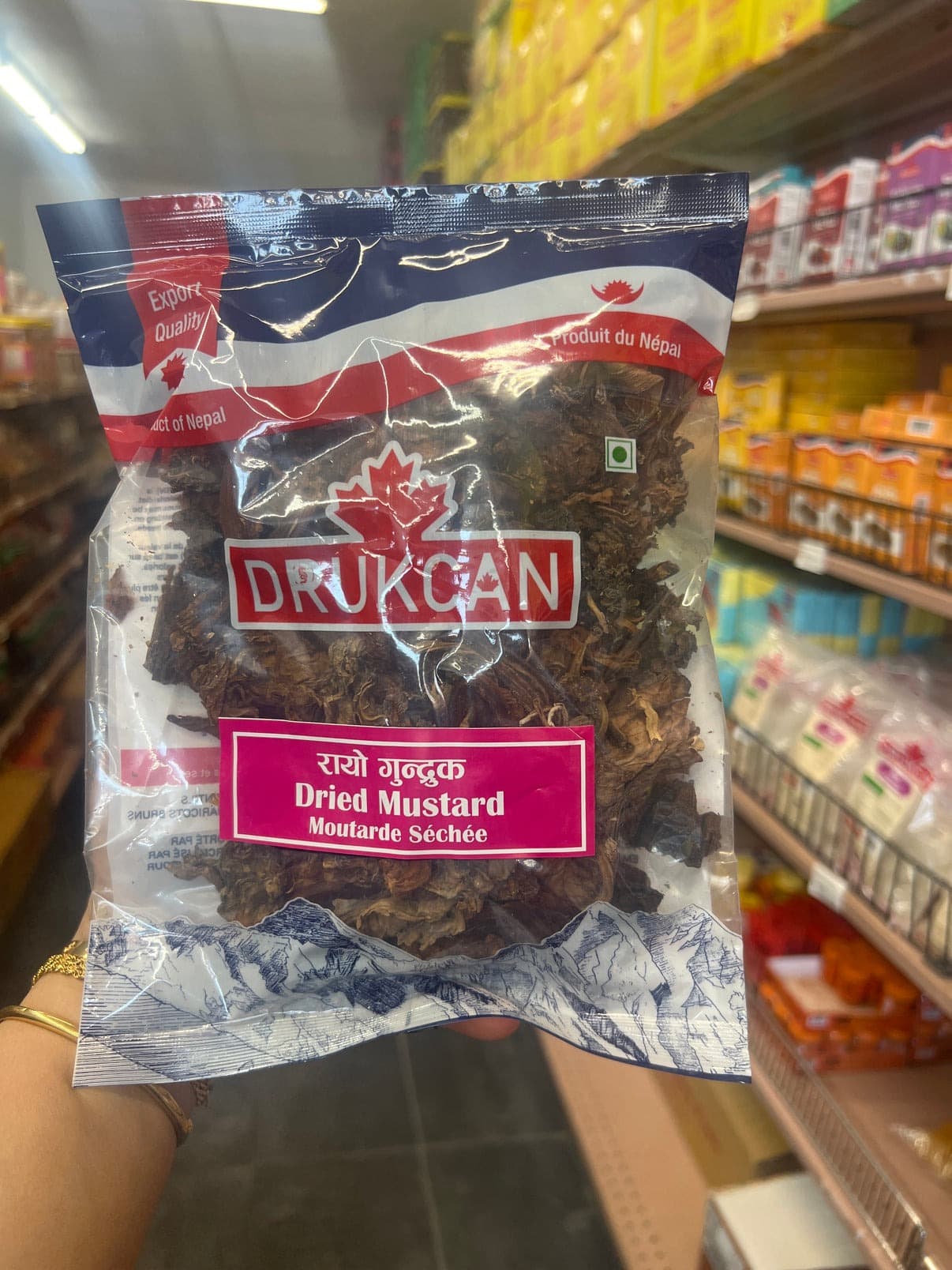
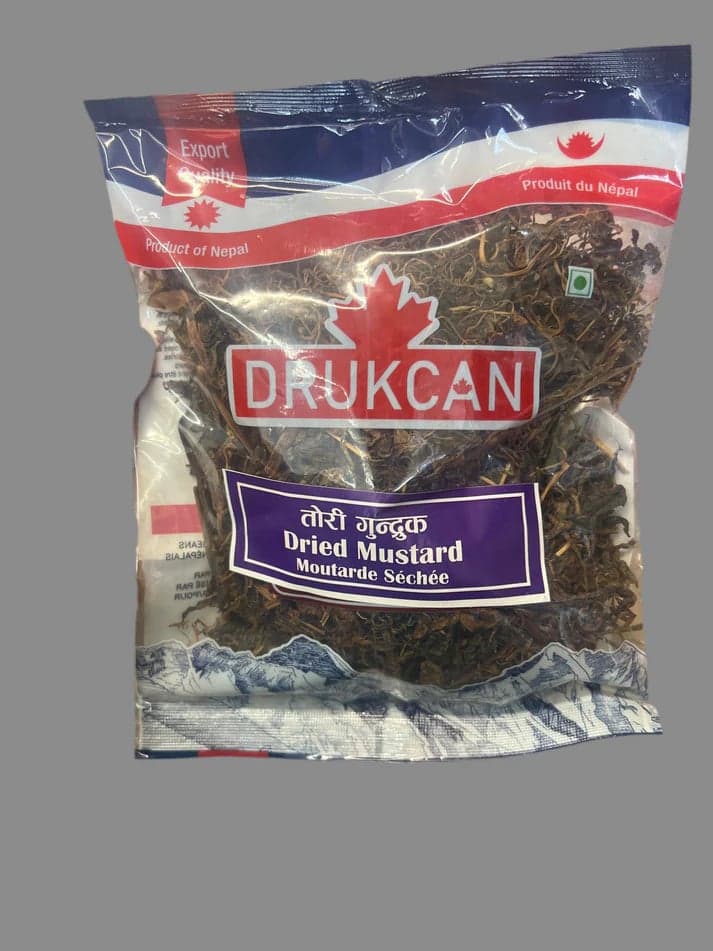
We stock DRUKCAN Dried Mustard Gundruk, made from mustard greens and the most common style you'll find in restaurants back home. If you want something slightly milder and leafier, DRUKCAN Tori Gundruk is worth trying, tori being a related mustard-family green with its own subtle flavour.
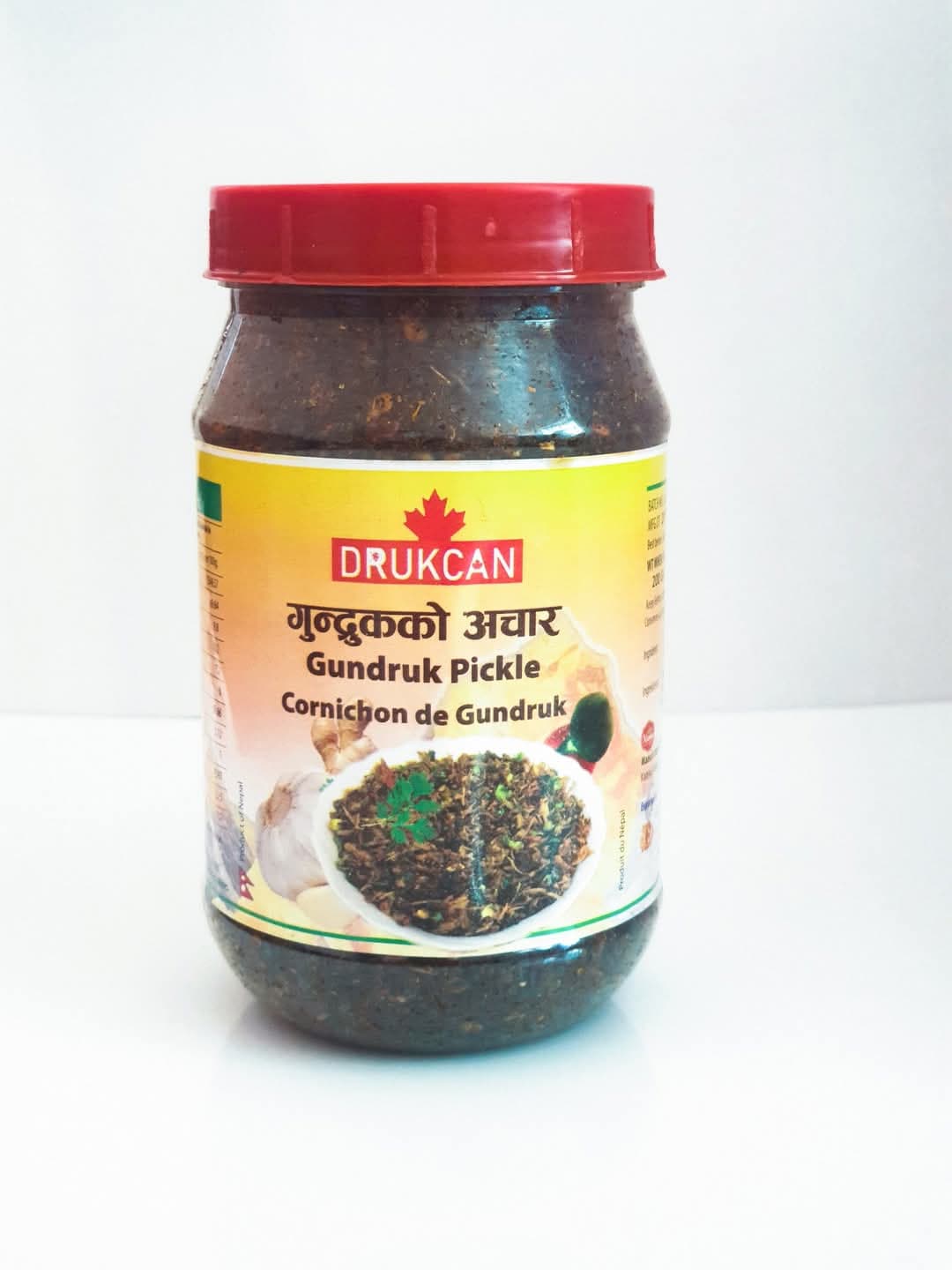
If you'd rather skip the rehydrating step entirely, DRUKCAN Gundruk Pickle is already cooked down into a ready-to-eat achar, jarred with oil and spice. It's a shortcut, not a substitute for the soup, but it's genuinely good spooned over rice on a weeknight.
All three ship nationwide from our nepali-indian grocery delivery service, whether you're in Vancouver picking up in person or having it shipped to Calgary, Toronto, or anywhere in between.
Gundruk ko Jhol: The Classic Soup
Jhol is how most Nepalis actually eat gundruk day to day: a thin, sour soup simmered with tomato, garlic, timur (Sichuan pepper), and often a handful of soaked beans or potatoes. It's the kind of dish that pairs with plain rice and turns into a full dal bhat spread.
The trick is rehydrating the dried gundruk properly first: soak it in warm water for 15-20 minutes, then rinse and roughly chop before it goes into the pot. Skipping the soak leaves it tough and stringy.
We've written out the full method, ratios and all, in our gundruk ko jhol recipe. It's a forgiving dish once you understand the base.
Gundruk Sadeko: The Spicy, Tangy Version
Sadeko is the cold, punchy cousin of jhol: rehydrated gundruk tossed with mustard oil, chopped tomato, garlic, ginger, and sliced green or red chili, no cooking required beyond a quick blanch. It's closer to a salad and it's the version most people crave with a plate of momo or as a side to grilled meat.
Khokana Mustard Oil is non-negotiable here. Its roasted, slightly pungent character is what gives sadeko its signature bite, and a neutral oil just won't do the same job.
For heat, Akabare Khursani Achar stirred in gives sadeko a rounder, fermented spice instead of raw chili sharpness. And if you want to build a full sadeko-style plate, our sukuti sadeko recipe uses the same dressing logic with dried meat instead of greens, so the two make an easy weekend spread together with Authentic Buff Sukuti on the side.
Cooking Tips: Getting Texture and Sourness Right
Dried gundruk varies in sourness batch to batch, since it's a fermented product, not a manufactured one. Taste a soaked piece before committing a whole packet to the pot; if it's very sour, a shorter simmer keeps it bright, and if it's mild, let it cook longer with tomato to build depth.
Don't over-soak it. Fifteen to twenty minutes in warm water is enough for most dried gundruk. Longer than that and it turns mushy and loses the slight chew that makes the texture interesting.
Store any unused dried gundruk in an airtight container in a cool, dry cupboard. It keeps for months. Once rehydrated and cooked, treat leftovers like any cooked green: refrigerate and use within a few days.
Gundruk vs Sinki, and Why It's Good For You
Gundruk often gets confused with sinki, another fermented staple, but they come from different vegetables and taste noticeably different. If you're stocking your pantry with both, our gundruk vs sinki comparison breaks down exactly when to reach for each.
Beyond flavour, gundruk carries real nutritional weight: the fermentation process boosts B vitamins and gut-friendly bacteria while the leafy base brings fibre and minerals. We go deeper into that in our gundruk nutrition and benefits guide if you're curious what a bowl of jhol is actually doing for you beyond the taste.
Frequently asked questions
What is gundruk made from?
Traditionally from mustard greens, radish leaves, or cauliflower leaves that are wilted, packed, fermented for several days, and then sun-dried. Our dried mustard gundruk uses mustard greens, the most common base.
Is gundruk pickle the same as dried gundruk?
No. Dried gundruk needs soaking and cooking before it's eaten, usually as jhol or sadeko. Gundruk pickle is already cooked down with oil and spice and is ready to eat straight from the jar, more of a condiment than a base ingredient.
How do I rehydrate dried gundruk?
Soak it in warm water for 15-20 minutes, then rinse and roughly chop before adding it to soup or salad. Over-soaking makes it mushy, so check it at the 15-minute mark.
Is gundruk vegan?
Dried gundruk itself is just fermented greens, so yes, it's vegan and vegetarian. Jhol soup made with just vegetables stays vegan too; some households add dried fish or meat, so check the recipe if that matters to you.
How spicy is gundruk sadeko?
It's adjustable. The base is tangy and savoury from the mustard oil and fermentation, with heat coming from however much chili or akabare khursani achar you stir in. Start light and add more; it's easy to increase, harder to dial back.
Where can I buy gundruk in Canada?
Danphe Stores carries dried gundruk, tori gundruk, and gundruk pickle, all shipped nationwide across the country, or picked up in person at our Vancouver shop on East Hastings St.
Shop the pantry
Authentic Himalayan staples, delivered anywhere in Canada.
Keep reading
Nepali & Indian Grocery Delivery Across Canada
One Vancouver shop, one nationwide delivery run: real Nepali and Indian groceries shipped coast to coast.
Read the guideGundruk ko Jhol Recipe: Fermented Greens Soup
A sour, warming bowl of fermented gundruk simmered with potato and tomato, the way Nepali kitchens have made it for generations.
Read the recipeGundruk vs Sinki: Two Nepali Fermented Foods
Gundruk is fermented leafy greens, sinki is fermented radish root: same sour, funky family, completely different jar.
Read the guideGundruk Nutrition & Benefits: Fermented-Greens Health
Nepal's tangy fermented leafy greens pack live cultures, plant iron, and fibre into one sun-dried, shelf-stable staple.
Read the guide