 Up to 10% off everything with code NEPAL — donate your savings to the PM Disaster Relief Fund
Food & Nutrition Guides
Beans on a Vegan or Vegetarian Diet: Why They Do the Heavy Lifting
Take meat off the plate and something has to do its job: protein, iron, zinc, and enough substance that you are not hungry an hour later. In Nepali and Indian kitchens that job has always belonged to beans — rajma, chana, moong, bodi, bhatmas, the nine-bean kwati of Janai Purnima. This is an honest look at what beans actually deliver on a vegan or vegetarian diet, what they don’t, and how to stock a shelf you will genuinely cook from.
By Bishnu Koirala · Founder & CEO
Published
On this page
| Rajma | Kabuli chana | Moong | Bodi | Black soybean | |
|---|---|---|---|---|---|
| Protein | ~24 g~48% DV | ~19 g~38% DV | ~24 g~48% DV | ~24 g~48% DV | ~36 g~72% DV |
| Dietary fibre | ~25 g~89% DV | ~17 g~61% DV | ~16 g~57% DV | ~11 g~39% DV | ~9 g~32% DV |
| Iron | ~8.2 mg~46% DV | ~6.2 mg~34% DV | ~6.7 mg~37% DV | ~8.3 mg~46% DV | ~16 mg~87% DV |
| Folate | ~394 µg | ~557 µg | ~625 µg | ~633 µg | ~375 µg |
| Calories | ~333 | ~378 | ~347 | ~336 | ~446 |
| Vitamin B12 | 0 | 0 | 0 | 0 | 0 |
| Soak before cooking? | Yes, 8h | Yes, 8h | Optional | Optional | Yes, 8h |
Why beans carry a meat-free plate
Vegetables are not the problem in a vegetarian diet — nobody struggles to eat more spinach. The gap meat leaves behind is a specific one: concentrated protein, absorbable iron and zinc, and food dense enough to keep you full. Beans are the one cheap, shelf-stable ingredient that covers most of that gap at once, which is why practically every largely vegetarian food culture on earth built itself around a legume.
Nepal and India did this centuries before anyone used the word “plant-based”. Dal bhat pairs a pulse with rice twice a day. Rajma chawal is a full dinner. Kwati — the nine-bean sprouted soup eaten at Janai Purnima — is essentially a festival built around legumes. Bhatmas (soybeans) get roasted and eaten by the handful. None of that was designed as a nutrition strategy; it was designed as food that worked, and it happens to be an extremely good template for eating well without meat.
The practical takeaway for a Canadian kitchen is that you do not need to invent a vegan diet from scratch. There is a working one, several thousand years old, and its ingredients are on our beans and lentils shelves.
Protein: what a bowl of beans actually gives you
Dry beans run roughly 19–24g of protein per 100g, and soybeans go far higher at about 36g. Those numbers look enormous next to meat until you remember that beans triple in weight as they cook while meat loses weight — so compare cooked to cooked. A generous cooked cup of rajma, chana or moong lands around 13–16g of protein; a cup of cooked soybeans is closer to 30g.
A useful baseline is about 0.8g of protein per kilogram of body weight per day, so roughly 56g for a 70kg adult, with many people aiming a little higher if they are older or training hard. Two bean-centred meals plus rice or roti will carry most of that on their own, before you count yogurt, nuts, seeds or soya chunks.
The table above compares five beans we stock on the same dry-weight basis. The honest summary: apart from soybeans, which are in a category of their own, the differences between beans are small. Rajma, moong and bodi are within a gram or two of each other, and chickpeas trail only slightly. Cook the one you like — the “highest protein bean” debate matters far less than actually eating beans most days. If you want the same comparison across the split-lentil aisle, our dal protein guide lines up toor, moong, masoor and chana.
The “complete protein” question, answered honestly
You will still read that plant proteins are “incomplete” and must be carefully combined at every meal. The first half is roughly true and the second half is outdated. Beans contain all nine essential amino acids; they are simply lower in methionine relative to what your body needs, while grains are lower in lysine — and beans are rich in exactly the lysine grains lack.
What has changed is the timing rule. Nutrition bodies no longer advise combining proteins at the same sitting: your body maintains an amino acid pool across the day, so beans at lunch and rice at dinner do the same work as both together. The classic pairings — dal with bhat, rajma with chawal, chana with roti — get there anyway, which is why they became classics.
Two exceptions worth knowing: soy is a complete protein on its own by any measure, which is why black soybean and soya chunks are such useful things to keep around, and quinoa is too. Everything else works best in rotation. Eat several kinds of beans across a week rather than the same bag on repeat, and the amino acid question resolves itself.
Iron, zinc — and the B12 caveat
Iron is where vegetarian diets most often quietly run short, and beans are one of the best plant sources: 100g of dry rajma or bodi carries roughly 8mg, and soybeans nearly double that. The catch is that plant (non-heme) iron is absorbed less efficiently than the iron in meat, and phytates in whole pulses lower absorption further.
Two habits fix most of this. First, eat vitamin C alongside the beans — tomato in the gravy, lemon over the top, a spoon of achar on the side — which can multiply non-heme iron absorption several times over. Second, keep tea and coffee away from the meal itself; the tannins in strong chiya bind iron, so chiya an hour later rather than with dal bhat is the better habit. Soaking, sprouting and fermenting all break down phytates too, which is exactly what kwati (sprouted) and gundruk (fermented) do by tradition. Zinc follows the same rules: beans supply a decent amount, and soaking and sprouting make more of it available.
Now the part a grocer should say plainly: beans contain no vitamin B12. None. B12 comes from animal foods and from fortified or supplemented sources, and a strict vegan diet needs one of those — fortified plant milk or nutritional yeast, or a supplement. Vegetarians who eat dairy usually get by, but the deficiency is slow, cumulative and genuinely harmful, and no amount of beans prevents it. It is the one gap on this page that shopping well cannot close.
Fibre, blood sugar and the long game
Meat has no fibre; beans are among the richest sources on any shelf. Dry rajma is roughly 25% fibre by weight, and even a modest cooked serving covers a good share of the 28g daily target most adults never reach. That fibre is the reason a bean-based meal keeps you full for hours despite costing very little.
It also blunts the blood-sugar curve. Beans are low on the glycemic index, and their soluble fibre slows digestion of everything eaten with them — which is a large part of why dal bhat sustains a day of physical work rather than producing an afternoon crash. The same soluble fibre feeds gut bacteria and modestly lowers LDL cholesterol over time.
This is the quiet advantage of vegetarian eating done properly: you are not merely replacing meat, you are adding something meat never provided. A plate built on beans arrives with fibre, folate, potassium and polyphenols attached.
Soaking, sprouting, and the gas problem
The most common reason people abandon beans is digestive, and it is fixable. The culprits are oligosaccharides — sugars we cannot digest but our gut bacteria happily ferment. Soak whole beans for 8 hours, throw the soaking water away, rinse, and cook in fresh water: a large share of those sugars leaves with the water you discarded.
The traditional spices are not decoration either. Hing (asafoetida), ajwain, cumin, ginger and timur all sit in Nepali and Indian bean cooking partly because they ease exactly this problem — our spices & masala shelf carries the usual suspects. And go gradually: gut bacteria adapt over a few weeks, so someone eating beans daily has a far easier time than someone eating them once a month.
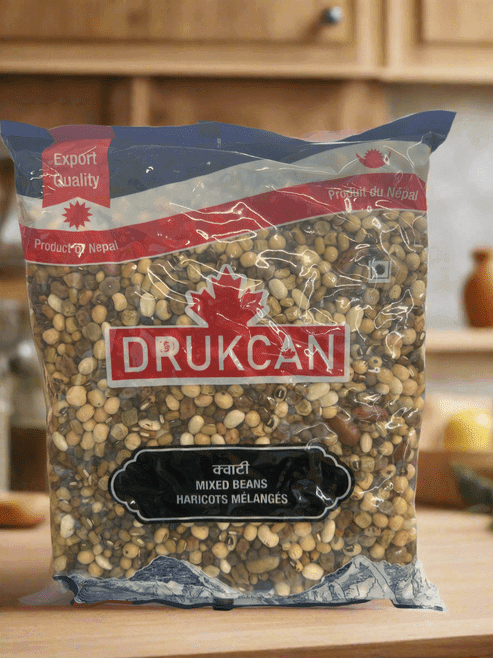
Sprouting goes one step further. Soak beans, drain, and leave them covered for a day or two until small tails appear: oligosaccharides drop, phytates drop, vitamin C rises, and minerals become easier to absorb. That is precisely what kwati is — nine sprouted beans in one pot — and Kwati Mixed Beans gives you the whole mix in a single bag. Moong is the most forgiving bean to start with.
Stocking a vegetarian bean shelf
A shelf worth cooking from needs variety more than volume — different textures for different meals, and enough rotation that you are not eating one amino acid profile all week. Five or six bags cover almost everything.
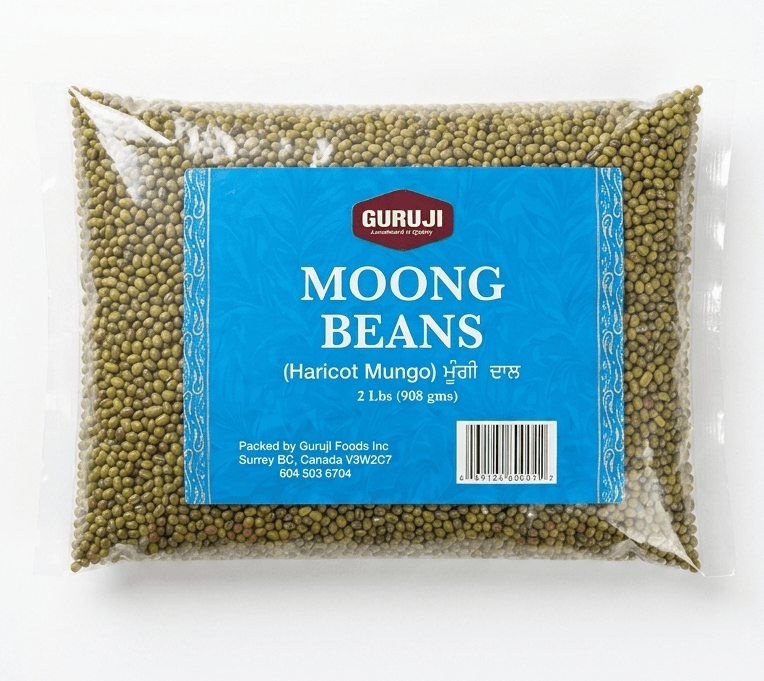
Start with Rajma (Kidney Beans) for meaty, slow-cooked gravies — the rajma chawal recipe is the obvious first cook, and our rajma guide covers soaking and texture in detail. Add Chickpeas (Kabuli Chana) for chana masala, hummus and salads, and Moong Beans as the fast, light, sprout-friendly everyday option. Black-Eyed Beans (Bodi) cook quickly without soaking and hold their shape in a bodi ko tarkari.
Then the higher-protein specialists: Nepali Black Soybean at roughly 36g of protein per 100g, best known roasted into bhatmas sadeko, and Soya Chunks if you want a straightforward meat substitute — see the soya chunks guide. For something Canadian supermarkets simply do not carry, the Himalayan heirlooms are worth the shelf space: Horse Gram (Gahat), long eaten in the hills as a warming winter soup, and the red, black and mixed simi in our Jumla beans guide.
Putting it on the plate
A week that works looks unremarkable, which is the point: dal bhat two or three evenings (our dal bhat recipe is the plain, honest version), a pot of rajma or chana that carries two dinners, sprouted moong in a salad or a light soup, and roasted bhatmas as the snack that replaces chips. Add rice or roti, something sour for the iron, and a vegetable.
Cook in batches. Beans are cheap in the way that rewards planning: soak overnight, pressure-cook a big pot, and you have the protein base for several meals in the fridge. This is also the answer to the cost question people rarely ask out loud — a 2lb bag of beans is one of the least expensive sources of protein in any Canadian grocery store, vegetarian or not.
We ship the whole bean shelf from our Vancouver store to every province and territory, so stocking a proper vegetarian pantry does not depend on living near a Nepali or Indian grocer. Browse beans and lentils to build the shelf, and the spices to make it taste like home.
Frequently asked questions
Are beans a complete protein?
Beans contain all nine essential amino acids, but are relatively low in methionine, while grains are low in lysine — which beans have plenty of. So beans plus rice or roti gives a fuller profile than either alone. You do not need to combine them in the same meal: your body pools amino acids across the day, so eating a variety of beans and grains over 24 hours is enough. Soybeans are an exception — they are a complete protein on their own.
How much protein can a vegan get from beans?
Dry beans run about 19–24g of protein per 100g, and soybeans around 36g. Because beans absorb water as they cook, a generous cooked cup delivers roughly 13–16g of protein (about 30g for soybeans). Two bean-centred meals a day, alongside rice or roti, covers most of the ~56g daily protein a 70kg adult needs.
Which beans have the most protein?
Soybeans, by a wide margin — about 36g per 100g dry, versus roughly 24g for rajma (kidney beans), moong and black-eyed beans, and about 19g for chickpeas. Outside soy, the differences are small enough that variety matters more than picking a winner.
Can beans provide enough iron on a vegetarian or vegan diet?
They are one of the best plant sources — around 8mg of iron per 100g of dry rajma or bodi, and roughly double that for soybeans. But plant (non-heme) iron absorbs less efficiently than iron from meat. Eat vitamin C with the meal (tomato, lemon, achar), keep strong tea or coffee away from mealtimes, and soak or sprout your beans to reduce phytates.
Do beans contain vitamin B12?
No. Beans contain no vitamin B12, and neither does any other plant food unless it has been fortified. Vegans need B12 from fortified foods (plant milk, nutritional yeast) or a supplement; vegetarians who eat dairy and eggs usually get enough. This is the one nutritional gap beans cannot fill.
How do I stop beans from causing gas?
Soak whole beans for about 8 hours, discard the soaking water, and cook in fresh water — that removes much of the oligosaccharides responsible. Cook with hing (asafoetida), ajwain, cumin or ginger, which traditionally ease the same problem, and increase your intake gradually so your gut bacteria adapt. Sprouting beans reduces it further still.
Are beans cheaper than meat for protein?
Considerably. A 2lb bag of dry beans is one of the least expensive protein sources in a Canadian grocery store, and it stores for a year in the cupboard. Batch-cooking a soaked pot gives you the protein base for several meals at a fraction of the per-gram cost of meat.
Where can I buy Nepali and Indian beans in Canada?
Danphe Stores stocks rajma, kabuli chana, moong, black-eyed bodi, kwati mixed beans, black soybean, gahat (horse gram) and Jumla simi, and ships to all 10 provinces and 3 territories from our Vancouver store — free delivery in central Metro Vancouver from $35, flat regional rates elsewhere.
Shop the pantry
Authentic Himalayan staples, delivered anywhere in Canada.
Keep reading
Dal & Lentils Protein Guide: Which Dal Has the Most
Every dal is a solid protein source, but they are not all equal, here is how toor, moong, masoor and chana actually compare.
Read the guideJumla Beans: Himalayan Heirloom Simi & Gahat
The heirloom beans grown at 2,300 metres in Jumla, shipped straight to your kitchen anywhere in Canada.
Read the guideRajma (Kidney Beans): The Complete Guide
Dark red, creamy, and made for a big pot of chawal: here is everything worth knowing about rajma.
Read the guideSoya Chunks (Nutrela-style): Protein & Recipes
Dry, cheap, high-protein soya chunks turn into a rich curry in twenty minutes, once you know the soaking trick.
Read the guide