
Food & Nutrition Guides
Sukuti Nutrition: Protein in Nepali Dried Meat
Sukuti (sun-dried, spice-rubbed meat) has been a Himalayan way to preserve protein for months at a time, long before anyone called it a “high-protein snack.” Here's what buff sukuti actually delivers in protein, calories and fat, and how to work it into a balanced plate.
By Bishnu Koirala · Founder & CEO
Published
On this page
What Sukuti Actually Is
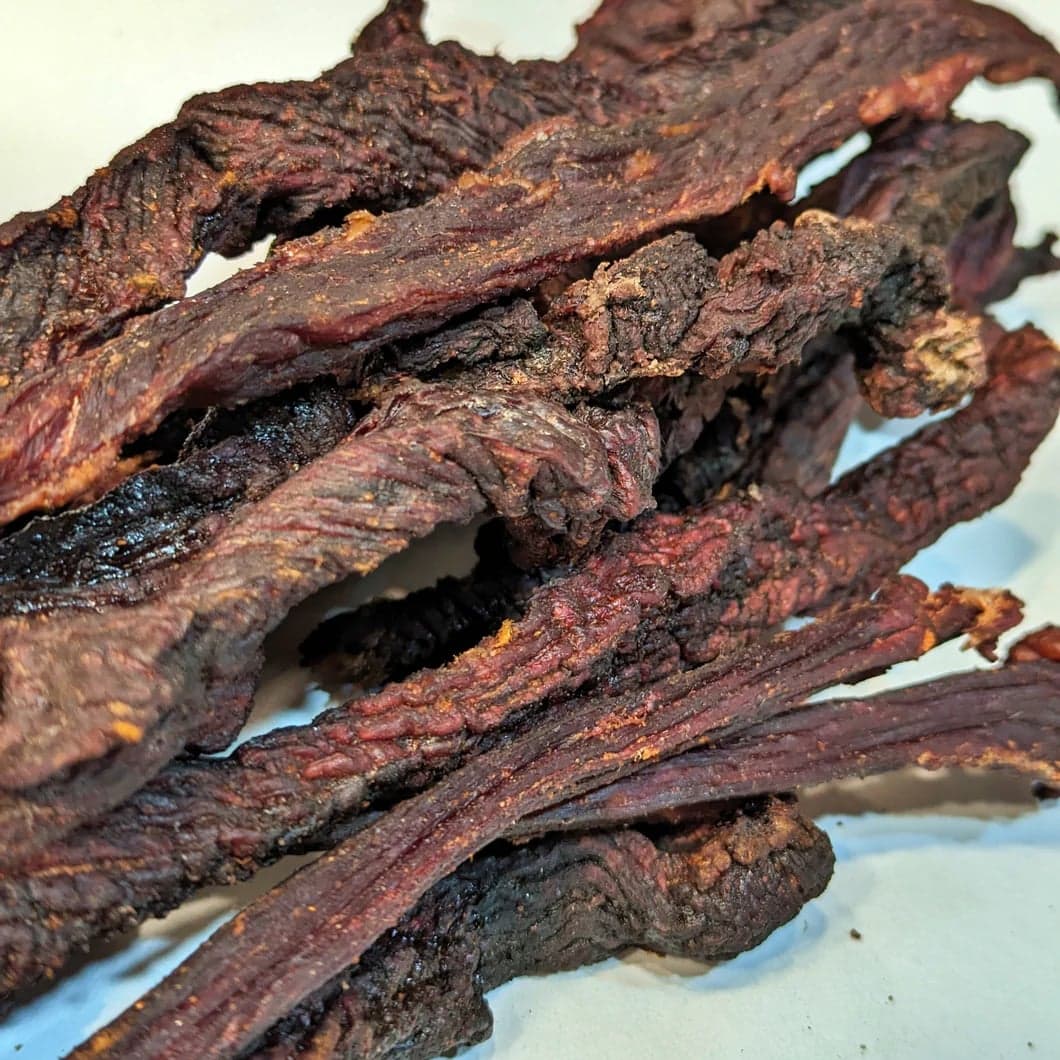
Sukuti is meat, traditionally buffalo (buff) or goat (khasi), cut into strips, rubbed with salt and spices like timur and dry chilli, then sun-dried until most of the moisture is gone.
That drying is the whole trick. Removing water concentrates everything that's left behind, protein included, into a smaller, shelf-stable piece of meat that doesn't need refrigeration until it's opened.
It comes out of the tradition of Himalayan households preserving meat before the days of freezers, the same instinct behind gundruk and other dried, fermented staples in the Nepali kitchen. If you want the full picture of how it's made and the regional variations, our sukuti guide covers that in depth.
Buff Sukuti Protein and Calorie Facts
Buffalo meat starts out lean and dense in protein, and drying only concentrates that further. As a rough, label-based rule for dried buff sukuti: a 100g serving typically lands somewhere around 50-55g of protein, with calories in the 250-300 range depending on how much fat was trimmed before drying and how long it was sun-dried.
That's a meaningfully higher protein-per-gram number than fresh cooked buff meat, simply because water weight has been removed. Fat content stays moderate to low if the cut was trimmed well, which is part of why sukuti has always been treated as a lean, portable protein rather than a fatty preserved meat like some cured sausages.
Sodium is the other number worth watching. The salt used in curing and drying adds up, so sukuti is best treated as a concentrated protein food eaten in modest portions, not a food to snack on by the handful all day.
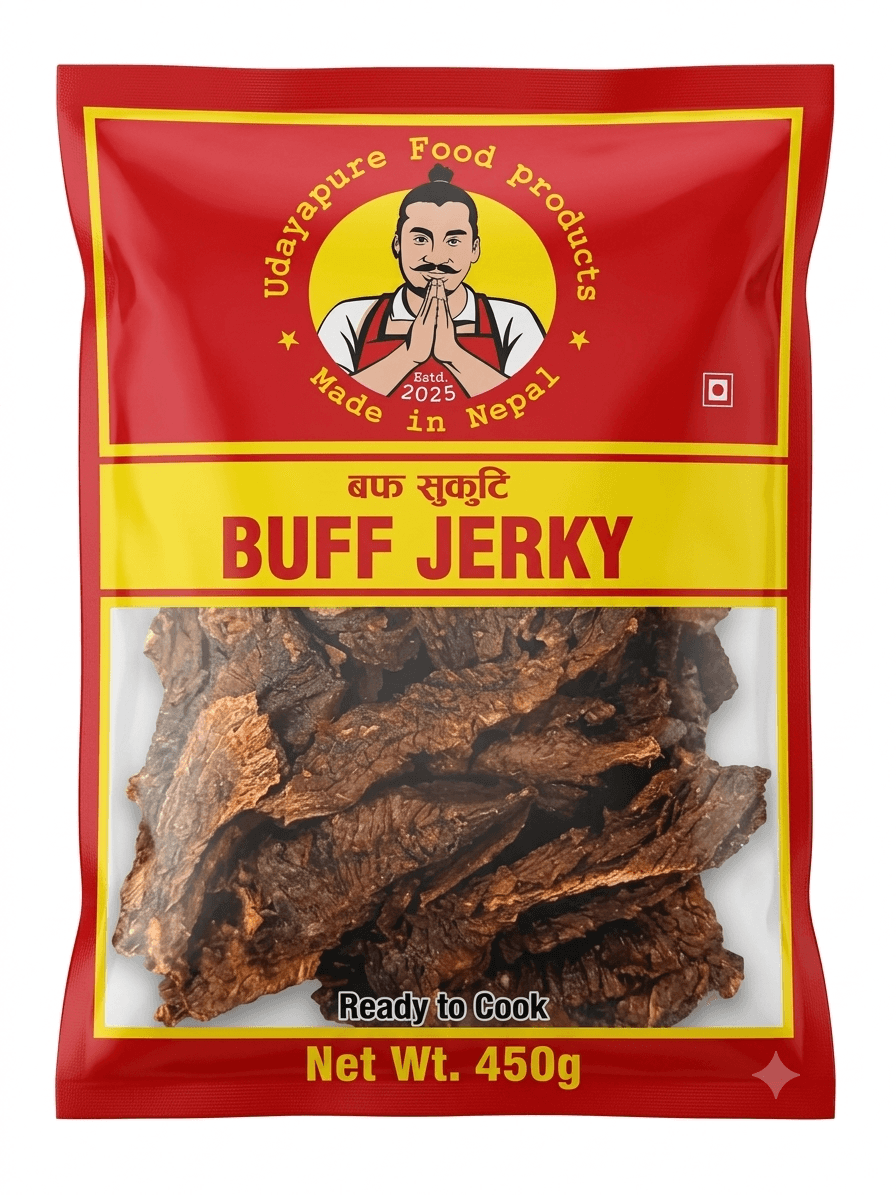
Always check the nutrition label on the specific pack you buy, brands and cuts vary, but the Authentic Buff Sukuti and Udayapure Buff Sukuti are both good reference points for what a well-trimmed, properly dried buff sukuti looks like on paper.
How Sukuti Stacks Up Against Other Protein Sources
Gram for gram, dried sukuti out-protein's most fresh meats simply because of the water loss, but that also means calories per gram go up, so portion size matters more than with a fresh cut.
Compared to plant proteins common in the same kitchen, like toor dal or moong dal, sukuti delivers a more complete amino acid profile per gram and no cooking is required, while dal brings fibre that meat simply doesn't have. Most Nepali plates aren't choosing one over the other, they're built on both.
If you're comparing the two main styles of sukuti sold here, our buff vs mutton sukuti breakdown covers the practical differences in fat, flavour and price between buff and the mutton jerky (khasi ko sukuti).
Where Sukuti Fits in a Balanced Nepali Diet
Traditionally sukuti isn't a meal on its own, it's a protein-dense component folded into a bigger plate. Shredded and tossed with mustard oil, onion, chilli and lemon, it becomes sukuti sadeko, a cold, punchy side dish that shows up at gatherings and as a snack with raksi or beer.
It also has a place alongside dal bhat, the everyday Nepali plate built around rice, dal and vegetables. A few strips of sukuti sadeko on the side turns a mostly plant-based meal into one with a real protein bump, without needing a separate meat curry.
For the wider context of how dried and preserved foods like this fit into Nepali cooking generally, Nepali cuisine's Indian and Tibetan influences is worth a read, sukuti sits right at the crossroads of Himalayan preservation techniques and everyday flavour.
Getting the Most Protein Benefit From Sukuti
Portion it. Because it's calorie-dense per gram, 30-50g of dried sukuti is usually plenty as a protein add-on to a meal, rather than eating a whole 450g pack in one sitting.
Pair it with something that balances the sodium and adds fibre, dal, rice, or a side of vegetables. That's exactly how it's traditionally served, never alone.
If you want the full recipe for the classic preparation, our sukuti sadeko recipe walks through shredding, roasting and seasoning it properly so the protein isn't drowned out by too much oil.
For convenience, the ready-to-eat buff sukuti packs and Udayapure ready-to-eat version are already cooked and portioned, useful if you want the protein without prepping raw dried meat yourself.
Choosing the Right Sukuti for Your Goals
If you're buying for a household that eats it as sadeko or with dal bhat, the standard Authentic Buff Sukuti or the larger Udayapure Buff Sukuti 450g pack gives you more control over how it's cut and prepared.
If you want a quick protein snack with no prep, reach for the ready-to-eat packs instead. And if you're comparing meats for flavour or dietary reasons, mutton jerky from goat meat has its own protein and fat profile worth a look.
All of it ships from our meat category and sukuti category through Danphe Stores' nationwide delivery, part of the broader Nepali and Indian grocery delivery across Canada that gets pantry staples from our Vancouver shop to doorsteps in every province and territory.
Frequently asked questions
How much protein is in sukuti?
It varies by brand and cut, but dried buff sukuti typically runs around 50-55g of protein per 100g, roughly double what you'd see in the same weight of fresh cooked meat, because drying removes most of the water weight and concentrates what's left. Always check the label on the specific pack, like Authentic Buff Sukuti, since drying time and trimming affect the exact numbers.
Is buff sukuti healthy?
In sensible portions, yes, it's a lean, dense source of protein with moderate fat. The main thing to watch is sodium, since the curing and drying process relies on salt. Eating it the traditional way, shredded into sukuti sadeko or as a side with dal and rice rather than a whole pack at once, keeps portions reasonable.
Is sukuti higher in protein than fresh meat?
Per gram, yes. Drying removes water, so the remaining protein is more concentrated by weight. That also means it's more calorie-dense per gram, so a smaller portion of sukuti delivers a similar protein amount to a larger portion of fresh meat.
What's the difference between buff sukuti and mutton sukuti nutritionally?
Buff (buffalo) sukuti tends to be leaner, while mutton (goat) jerky like our Khasi ko Sukuti can carry a bit more fat depending on the cut. Both are strong protein sources; the choice usually comes down to flavour preference. See our buff vs mutton sukuti comparison for a fuller breakdown.
How should I eat sukuti to get the most out of it?
Pair it with fibre and carbs rather than eating it alone, classic combinations are sukuti sadeko with rice, or a few strips alongside dal bhat. This balances the protein-dense meat with fibre and other nutrients from lentils and vegetables.
Does Danphe Stores ship sukuti across Canada?
Yes. All our sukuti and jerky ships from our Vancouver shop to all 10 provinces and 3 territories, with free delivery over $35 in central Metro Vancouver. See our nationwide grocery delivery guide for shipping details, or contact us at [email protected].
Shop the pantry
Authentic Himalayan staples, delivered anywhere in Canada.
Keep reading
Nepali & Indian Grocery Delivery Across Canada
One Vancouver shop, one nationwide delivery run: real Nepali and Indian groceries shipped coast to coast.
Read the guideSukuti (Nepali Dried Meat): Buff & Mutton Jerky
Sukuti is Nepal's smoky, sun-dried answer to jerky, and once you know buff from mutton, you will never look at a snack aisle the same way again.
Read the guideBuff vs Mutton Sukuti: Which Jerky to Choose
Buff sukuti is earthy and lean, mutton sukuti is richer and pricier: here's how to pick the right jerky for your next batch of sadeko.
Read the guideSukuti Sadeko Recipe: Spicy Dried-Meat Salad
Smoky buff sukuti tossed with mustard oil, timur and green chili: the tangy Nepali bar snack that turns any evening into a gathering.
Read the recipe