
Food & Nutrition Guides
Sukuti (Nepali Dried Meat): Buff & Mutton Jerky
Sukuti is Nepali dried meat, usually buff (water buffalo) or mutton (goat), cured with salt and spice then dried until it turns dark, chewy, and deeply savoury. It is Nepal's original road-trip snack and party-side dish rolled into one. This guide breaks down buff versus mutton, whole versus ready-to-eat, and how to turn either one into proper sukuti sadeko.
By Bishnu Koirala · Founder & CEO
Published
On this page
What Exactly Is Sukuti?
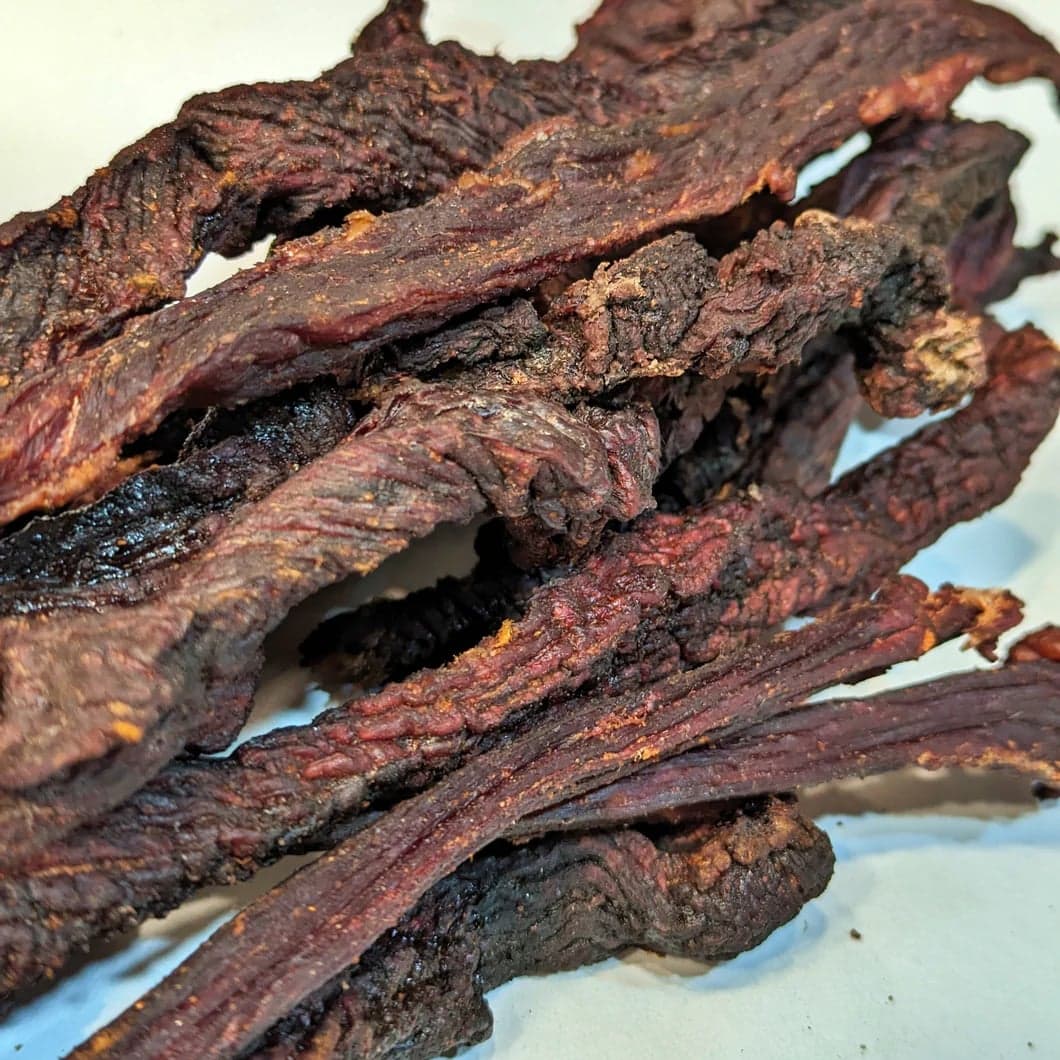
Sukuti is meat that has been salted, spiced, and dried, traditionally in the sun on a Nepali rooftop, until most of the moisture is gone and the flavour is concentrated into something dark, chewy, and intensely savoury.
It is the Nepali cousin of jerky, but with its own character: more garlic and timur (Nepali Sichuan pepper), less sugar, and almost always meant to be cooked again before it hits your plate rather than eaten straight from the bag like a Western beef stick.
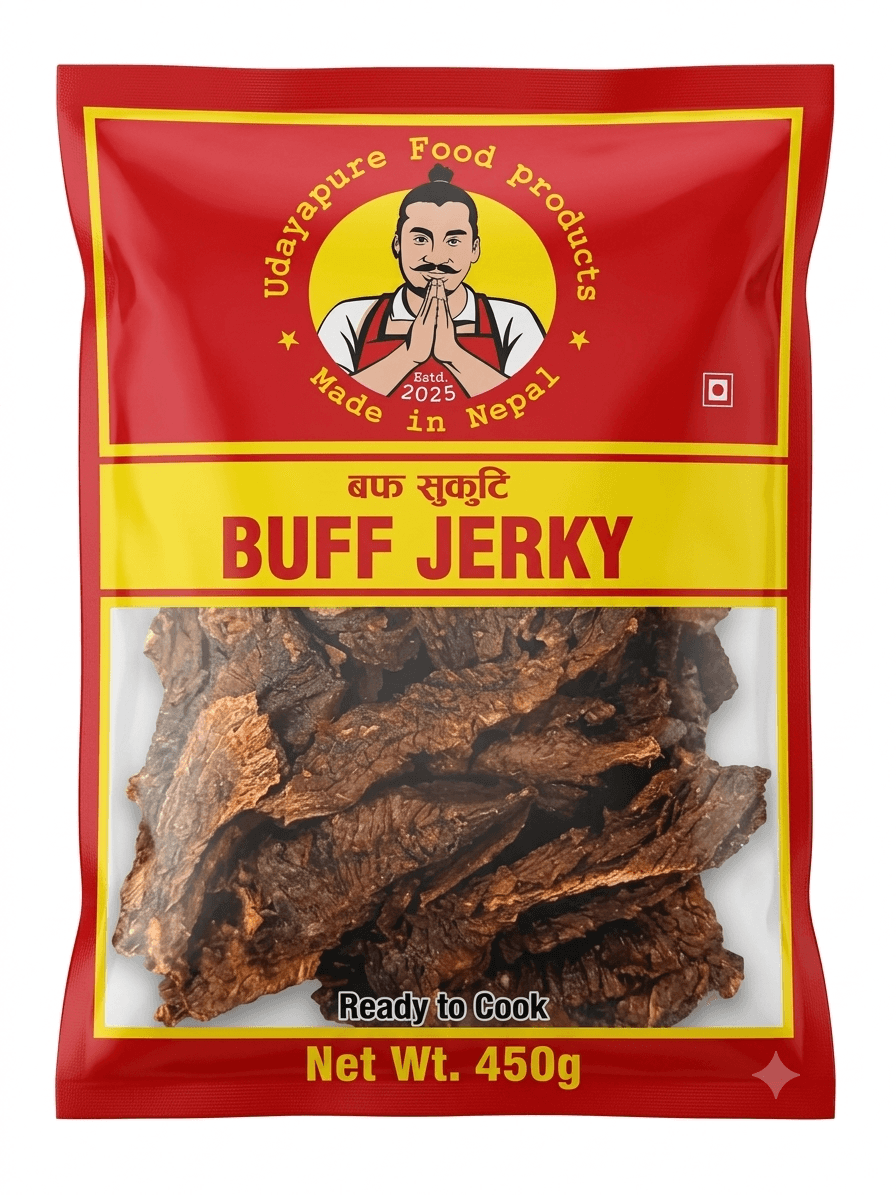
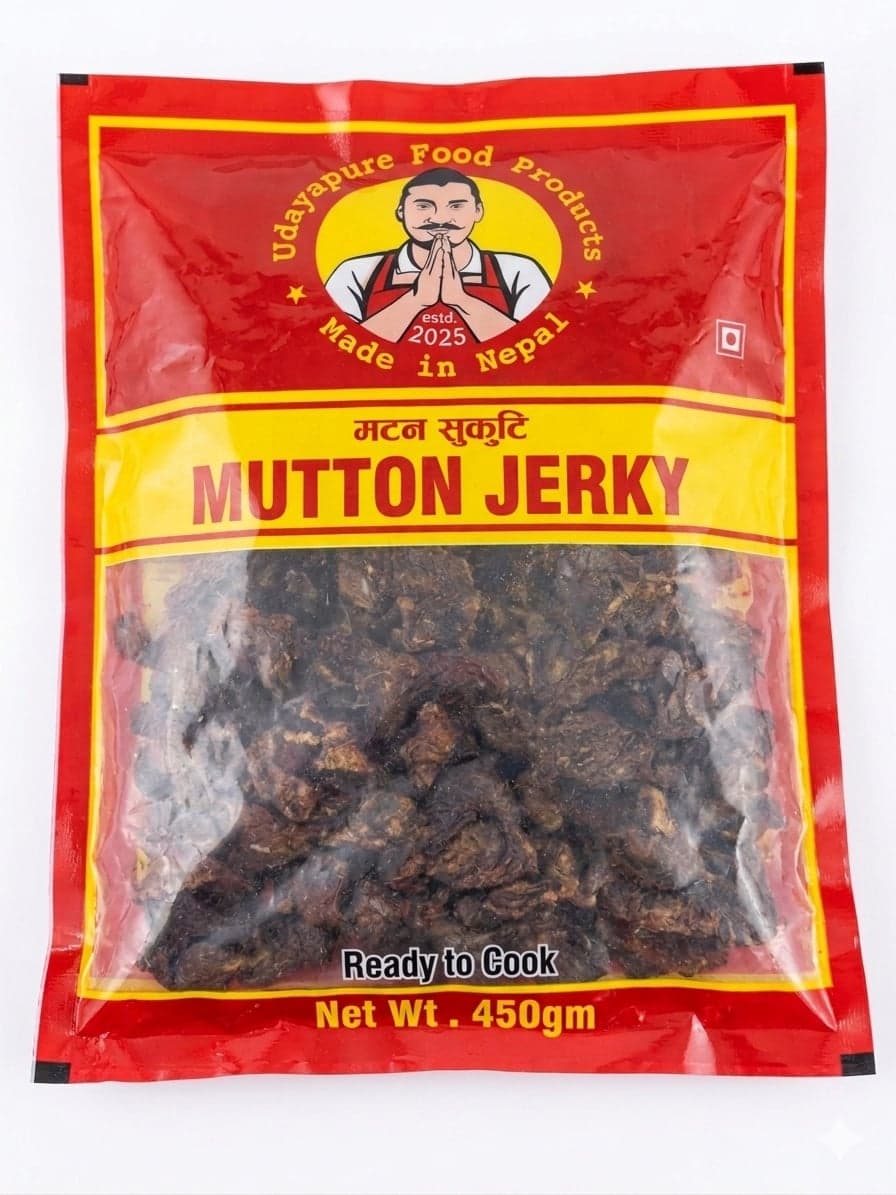
Two meats dominate the sukuti world. Buff sukuti, made from water buffalo, is the everyday version found in most Nepali households and on every tea-shop counter. Mutton sukuti, made from khasi (goat), is the richer, slightly gamier cousin usually saved for festivals and special guests.
Buff Sukuti vs Mutton Sukuti
Buff sukuti is leaner, more affordable, and dries into firmer strips, which is exactly why it is the sukuti most people grew up eating. Our Authentic Buff Sukuti and the thicker-cut Udayapure Buff Sukuti both fall into this camp: great for soaking, pan-frying, and turning into sadeko.
Mutton jerky, sold here as Khasi ko Sukuti, has more fat marbled through it, so it fries up softer and carries spice a little differently. Nepali households often keep both on hand: buff for the everyday tarkari, mutton for when someone important is visiting.
If you want the full side-by-side breakdown, including which one to pick for sadeko versus which one to pick for a curry, we wrote a dedicated comparison in Buff vs Mutton Sukuti: Which Jerky to Choose.
Whole Sukuti vs Ready-to-Eat: Which One Do You Need?
Traditional sukuti, the whole dried strips you find in the Sukuti category, needs a soak in warm water for 15 to 20 minutes to soften before you shred or pound it. This is the version serious cooks reach for because it takes seasoning deeply and holds its texture in a hot pan.
Ready-to-eat sukuti, like our Ready to Eat Buff Sukuti and Udayapure Ready to Eat Buff Sukuti, skips that step. It comes pre-cut, pre-fried or pre-spiced, and is genuinely snackable straight from the pack, no rehydrating, no stove.
Neither one is the outlier. Traditional sukuti is what you cook with; ready-to-eat sukuti is what you keep in the pantry for when a craving hits at 9pm and cooking is not happening.
How to Turn Sukuti Into Sadeko
Sukuti sadeko is the dish sukuti was born for: rehydrated dried meat, pan-fried until slightly crisp, then tossed with onion, tomato, cilantro, chili, lemon, and a good hit of timur for that signature tingly heat.
Timur (Sichuan pepper) is not optional here. It is what gives sadeko its buzzy, citrusy edge, and a small jar of our Timur (Sichuan Pepper) will season several batches. If you want measured spice blends instead of building from scratch, browse the wider spices & masala aisle.
We wrote out the full method step by step, quantities and all, in Sukuti Sadeko Recipe: Spicy Dried-Meat Salad. It works with either buff or mutton sukuti, so use whichever one is already in your fridge.
For background on why timur tastes the way it does and where else to use it, see Timur (Sichuan Pepper): The Zingy Nepali Spice.
What to Serve Alongside Sukuti
Sukuti rarely shows up alone at a Nepali table. It is a staple pairing with drinks, whether that is tea for a quiet evening or something stronger for a gathering, and it sits comfortably next to other fermented and pickled sides.
A classic combination is sukuti sadeko with a spoon of gundruk on the side, or with a bowl of dalmoth or furandana namkeen for guests who want something crunchy too.
If you are building a full snack spread, round it out from our snacks and pickles (achar) categories, both stocked with the sides that show up at every Nepali get-together.
Buying Authentic Sukuti in Canada
Good sukuti is hard to find outside a Nepali grocery. Mainstream jerky is smoked and sugar-cured; sukuti is salt-and-sun-dried with garlic, ginger, and Himalayan spice, and that difference shows up the moment you taste it.
Everything in this guide ships from our shop at 3634 East Hastings St in Vancouver to all 10 provinces and 3 territories: standard delivery runs 5 to 10 business days ($5 to $10, free from $35 within central Metro Vancouver), with same-day delivery available by phone for local Metro Vancouver orders.
For the bigger picture on how we ship Nepali and Indian groceries nationwide, from sukuti to spices to rice, see Nepali & Indian Grocery Delivery Across Canada.
Frequently asked questions
What is sukuti made of?
Sukuti is meat, most commonly buff (water buffalo) or mutton (goat), that is salted, rubbed with spice, and dried until most of the moisture is gone. It is Nepal's traditional dried meat, closer in spirit to biltong than to sweet, smoked Western jerky.
Is buff sukuti the same as beef jerky?
Not quite. Buff sukuti uses water buffalo meat and a Nepali spice cure heavy on garlic, ginger, and chili, with no sugar cure or liquid smoke. It is also usually rehydrated and pan-fried before eating rather than chewed dry, unless you buy a ready-to-eat pack. See our full buff vs mutton sukuti comparison for more detail.
How do I soften dried sukuti before cooking?
Soak whole sukuti strips in warm water for 15 to 20 minutes until they soften, then squeeze out the excess water before shredding or pounding. From there it is ready to pan-fry for sadeko or add straight into a curry.
What is the difference between sukuti and ready-to-eat sukuti?
Traditional sukuti is dried whole and needs to be soaked and cooked before eating; it is the version most people use for sadeko or curries. Ready-to-eat sukuti, like our Ready to Eat Buff Sukuti, is already cut, cooked, and seasoned, so you can snack on it straight from the pack.
What spice gives sukuti sadeko its distinctive kick?
Timur, also called Nepali Sichuan pepper, is the spice responsible for sadeko's tingly, citrusy heat. A small amount goes a long way; see our timur guide for how to use it beyond sukuti as well.
Do you ship sukuti and dried meat across Canada?
Yes. Every sukuti product on this page ships from our Vancouver store to all 10 provinces and 3 territories, typically in 5 to 10 business days, with free delivery on orders over $35 within central Metro Vancouver. Same-day delivery is available locally by calling 236-471-5891.
Shop the pantry
Authentic Himalayan staples, delivered anywhere in Canada.
Keep reading
Nepali & Indian Grocery Delivery Across Canada
One Vancouver shop, one nationwide delivery run: real Nepali and Indian groceries shipped coast to coast.
Read the guideBuff vs Mutton Sukuti: Which Jerky to Choose
Buff sukuti is earthy and lean, mutton sukuti is richer and pricier: here's how to pick the right jerky for your next batch of sadeko.
Read the guideSukuti Sadeko Recipe: Spicy Dried-Meat Salad
Smoky buff sukuti tossed with mustard oil, timur and green chili: the tangy Nepali bar snack that turns any evening into a gathering.
Read the recipeSukuti Nutrition: Protein in Nepali Dried Meat
Sukuti isn't just a snack, it's one of the densest protein foods in the Nepali pantry.
Read the guide