
Food & Nutrition Guides
Mustard Oil Health Facts: What to Know
Sarson ko tel, mustard oil, has been the working oil of Nepali and North Indian kitchens for generations. Here is what the label and the tradition actually say about its fat profile, its pungency, and how to use it well.
By Bishnu Koirala · Founder & CEO
Published
On this page
What is actually in the bottle
Mustard oil is pressed from the seeds of the mustard plant, the same family that gives us the greens used for gundruk and the black seeds used to temper dal.
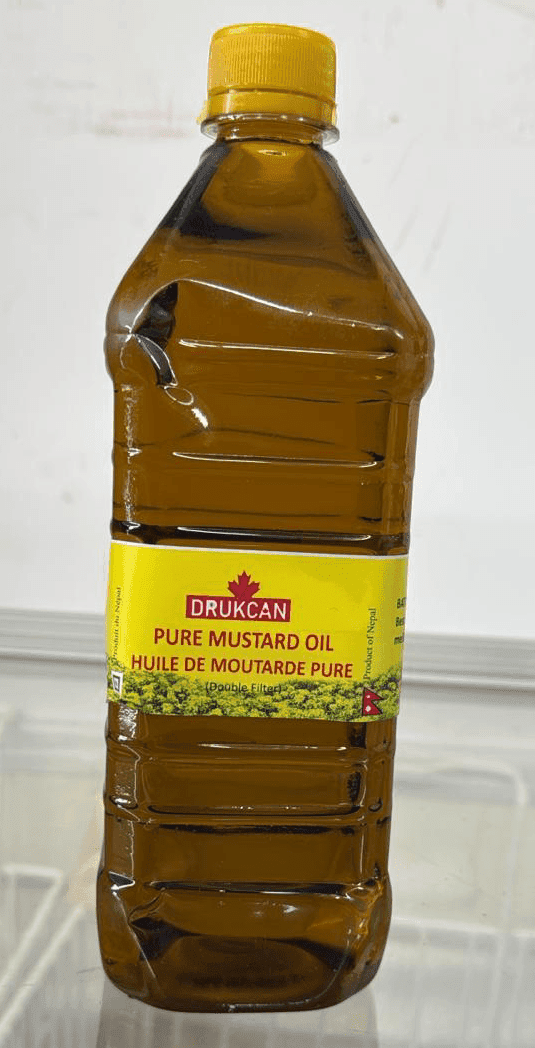
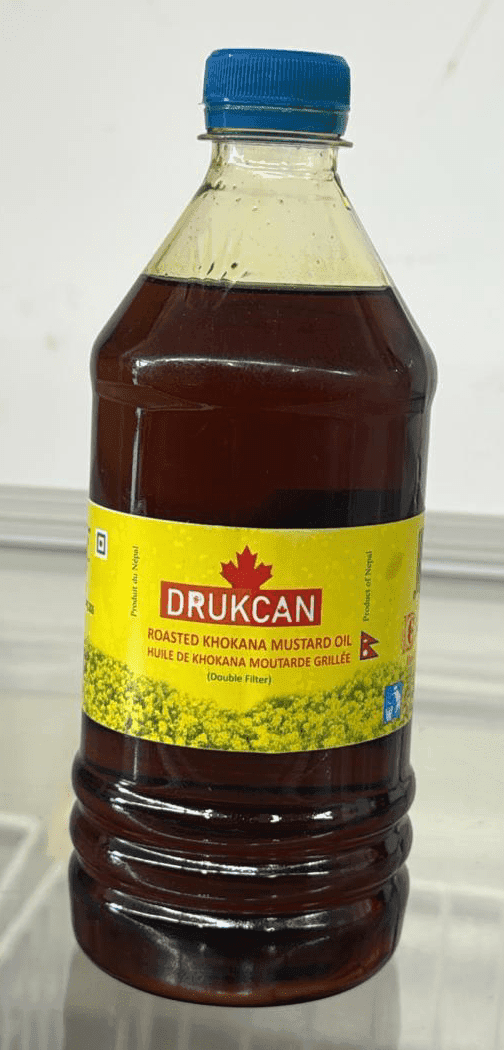
Nepali households usually reach for two forms: a raw, sharp-smelling pure mustard oil for pickling and finishing, and a milder pre-heated version like roasted Khokana mustard oil that is ready to cook with straight out of the bottle.
Both start from the same seed. The difference is whether the oil has already been heated to tame the pungency before it reaches your kitchen, which is exactly what our Khokana mustard oil guide walks through in more detail.
If mustard oil is just one item on a longer shopping list, our Nepali & Indian grocery delivery across Canada covers everything else you might need, from dal to spices, shipped from Vancouver to your door.
The fat profile: mostly MUFA
Nutrition labels group fat into saturated, monounsaturated (MUFA), and polyunsaturated (PUFA). Mustard oil stands out because it is roughly 60 percent monounsaturated fat, one of the higher MUFA shares among common cooking oils.
For comparison, sunflower oil leans polyunsaturated and canola oil sits closer to mustard oil on the MUFA scale, though with a milder, more neutral flavour. If you want the full side-by-side, our mustard vs sunflower vs canola oil comparison breaks down fat type, taste, and traditional use for each.
Mustard oil also naturally contains a small amount of omega-3 fatty acid (alpha-linolenic acid), which is less common in oils typically stocked in a Nepali or Indian pantry.
Erucic acid: what the label means
Mustard oil naturally contains erucic acid, a long-chain fatty acid that gives the oil part of its distinct pungency. Health Canada regulates the erucic acid content of edible oils sold here, so bottles sold in Canadian stores meet the same food safety standards as any other cooking oil on the shelf.
This is simply a labelling and regulatory fact worth knowing, not a reason to avoid the oil. Most families use mustard oil the way it has always been used: in moderate amounts, mixed into a varied diet alongside dal, rice, and vegetables, not as the only fat in every dish.
Smoke point and how to cook with it
Raw mustard oil has a lower smoke point than refined oils, which is why tradition calls for heating it until it just starts to shimmer and lightly smoke before adding spices. That step mellows the raw pungency and is a normal part of the cooking process, not a sign anything is wrong.
Pre-roasted oils like Khokana mustard oil skip that step since the heating has already happened at the mill, which is handy on a weeknight when you just want to get dinner going.
For deep frying at higher, steadier temperatures, some cooks prefer a refined oil like sunflower oil or canola oil and save mustard oil for tempering, achar, and pickling where its flavour actually matters.
Traditional uses beyond the cooking pot
Mustard oil is the backbone of Nepali achar. It carries the pungency that makes aloo ko achar taste sharp and alive, and it is the base for most pickle brines because it does not turn rancid quickly at room temperature.
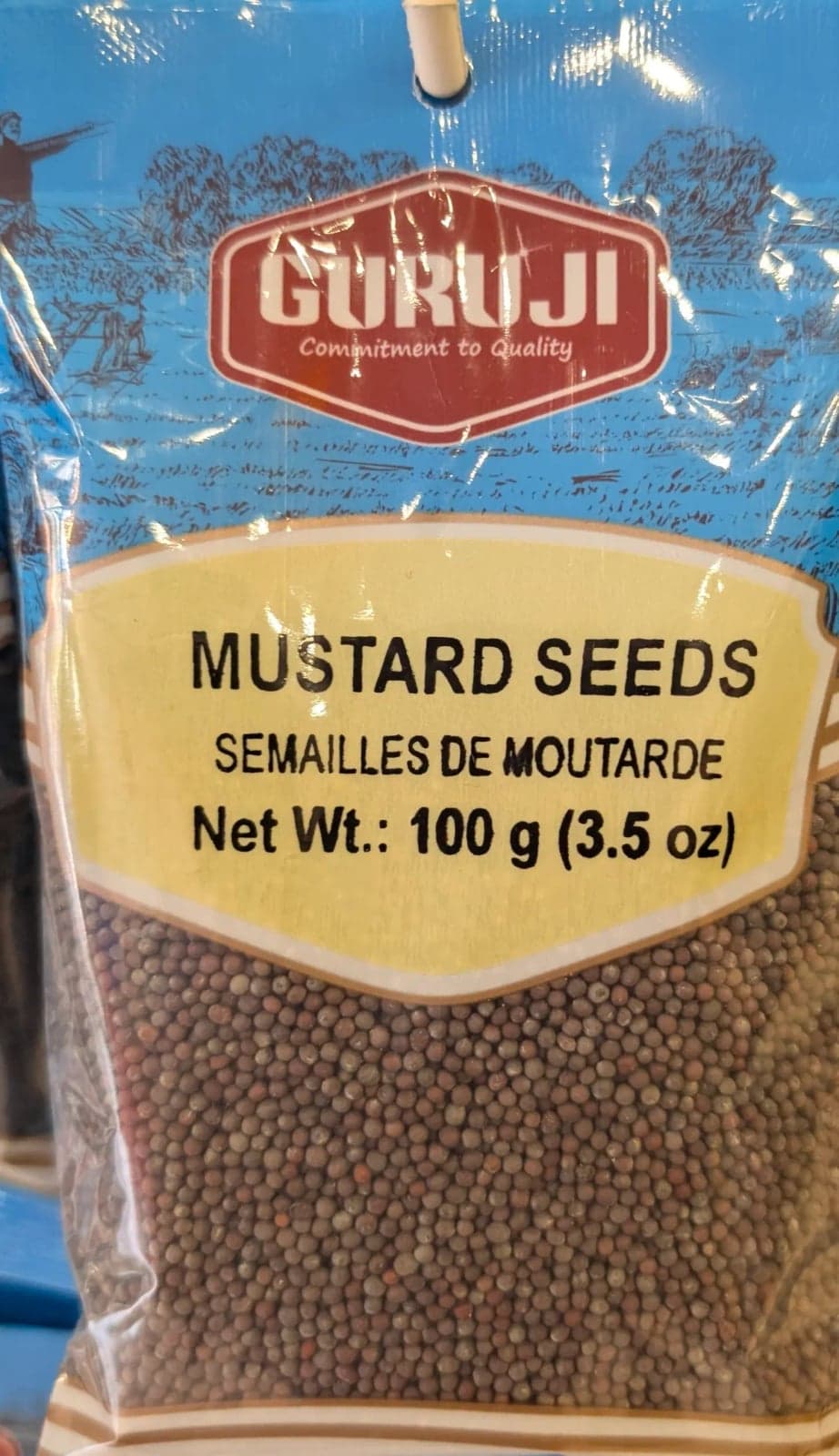
It is also the oil most commonly used to temper whole black mustard seeds with garlic and dried chili before they go into dal or vegetables, a technique used across Nepali and Indian cooking alike.
Outside the kitchen, mustard oil has a long history as a massage and hair oil in South Asian households, though that is a cosmetic tradition separate from its use as a cooking fat.
Frequently asked questions
Is mustard oil good for you?
Mustard oil is roughly 60 percent monounsaturated fat and contains some plant-based omega-3, which puts it among the more favourable fat profiles of common cooking oils. As with any oil, the best approach is moderate use alongside a varied diet of dal, rice, vegetables, and lentils, the way it has always been used in Nepali kitchens.
Why does mustard oil have a strong smell?
The pungency comes from natural compounds in the mustard seed, including the erucic acid content. Heating raw mustard oil until it lightly smokes mellows that sharpness, which is why most recipes call for that step before adding other ingredients.
What is the difference between raw and roasted mustard oil?
Raw, pure mustard oil like our Pure Mustard Oil is unheated and very pungent, best for pickling and finishing. Roasted mustard oil such as Khokana Roasted Mustard Oil has already been heated at the mill, giving it a milder, nuttier flavour that is ready to cook with straight away. Our Khokana mustard oil guide covers both in detail.
Can I use mustard oil for deep frying?
Yes, though many cooks prefer a neutral refined oil like sunflower oil or canola oil for high-heat deep frying and save mustard oil for tempering (tadka), pickling, and dishes where its flavour is the point.
Is mustard oil legal to sell in Canada?
Yes. Edible mustard oil sold in Canadian stores, including the mustard oil we ship nationwide from Danphe Stores, meets Health Canada's regulations for erucic acid content in cooking oils.
How should I store mustard oil?
Keep it in a cool, dark cupboard away from direct sunlight, tightly capped. Mustard oil is naturally quite stable and resists rancidity well, which is part of why it has been the go-to base for Nepali and Indian pickles (achar) for so long.
Shop the pantry
Authentic Himalayan staples, delivered anywhere in Canada.
Keep reading
Nepali & Indian Grocery Delivery Across Canada
One Vancouver shop, one nationwide delivery run: real Nepali and Indian groceries shipped coast to coast.
Read the guideKhokana Roasted Mustard Oil: Nepal's Signature Oil
The pungent, roasted oil that gives Nepali achar and tarkari their signature bite, explained and delivered anywhere in Canada.
Read the guideMustard vs Sunflower vs Canola Oil for Nepali Cooking
Pungent mustard, neutral sunflower, or light canola: here is which oil actually belongs in your Nepali kitchen, and when.
Read the guideGundruk Nutrition & Benefits: Fermented-Greens Health
Nepal's tangy fermented leafy greens pack live cultures, plant iron, and fibre into one sun-dried, shelf-stable staple.
Read the guide