
Food & Nutrition Guides
Mustard vs Sunflower vs Canola Oil for Nepali Cooking
Every Nepali kitchen argues about oil sooner or later. This guide breaks down mustard, sunflower and canola oil by flavour, smoke point and traditional use, so you know exactly which bottle to reach for when you are making achar, tarkari, or deep-frying sel roti.
By Bishnu Koirala · Founder & CEO
Published
On this page
| Mustard Oil | Sunflower / Canola Oil | |
|---|---|---|
| Flavour | Sharp, pungent, slightly bitter raw; mellows and turns nutty once heated | Neutral to mildly sweet, barely changes the taste of a dish |
| Smoke point | Roughly 250°C once properly heated through first | Roughly 225 to 230°C, plenty for everyday frying and sautéing |
| Best for | Achar, tadka, sukuti sadeko, fish curry, anything wanting that classic tikha edge | Deep-frying sel roti and pakoda, daily tarkari, baking, anything neutral |
| Traditional role | The backbone oil of Nepali and Bengali cooking for generations | A newer, everyday oil, common in Indian households and Canadian pantries alike |
| Fat profile | High in monounsaturated fat and omega-3 (erucic acid content varies by brand) | Canola leans lower in saturated fat; sunflower is higher in polyunsaturated fat |
| How it is sold here | Pure or roasted (Khokana-style), usually 500ml to 1L bottles | Usually large 3L jugs for everyday household use |
Why Nepali kitchens keep more than one oil
Walk into most Nepali homes and you will find at least two oils on the shelf, not one. Mustard oil sits next to a big jug of something neutral, usually sunflower or canola.
That is not indecision, it is division of labour. Mustard oil brings a sharp, almost horseradish-like bite that defines achar and certain fish and meat dishes. A neutral oil does the quieter daily work: sautéing onions, deep-frying, and anything where you do not want the oil itself to have an opinion.
If you are stocking a Nepali or Indian pantry from scratch, this is the first real decision to make, and it shows up constantly in the recipes on our Nepali & Indian grocery delivery across Canada hub.
Mustard oil: the pungent backbone of Nepali cooking
Mustard oil is pressed from mustard seeds and it is genuinely different from the other two. Straight from the bottle it smells sharp and a little bitter, almost like it will clear your sinuses.
That is by design. Heat it properly first (until it just starts to shimmer and the raw smell fades) and it mellows into something warm and nutty that carries spice beautifully. This is why it is the traditional base for achar, for tadka on dal, and for dishes like sukuti sadeko where you want the oil itself to add flavour, not just carry heat.
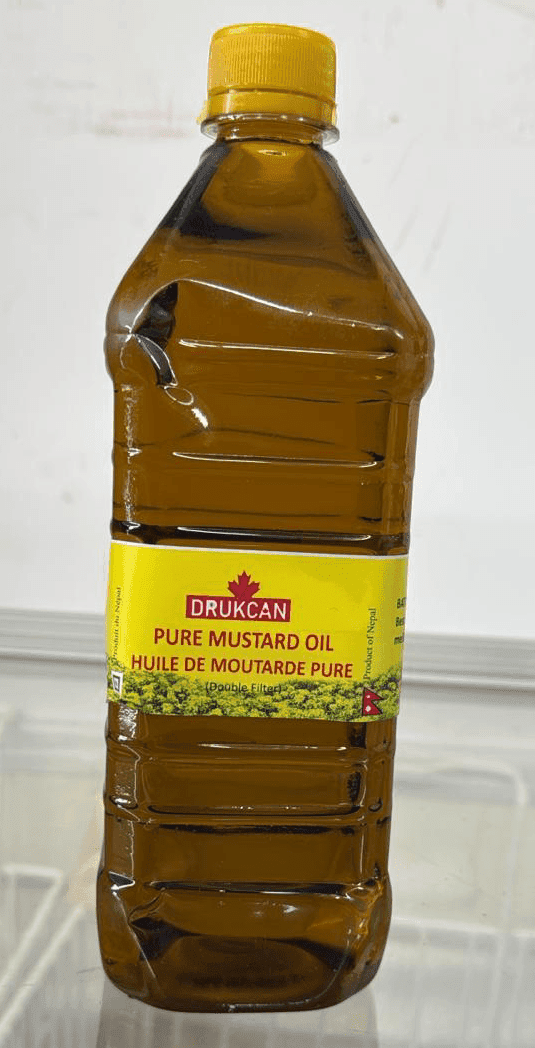
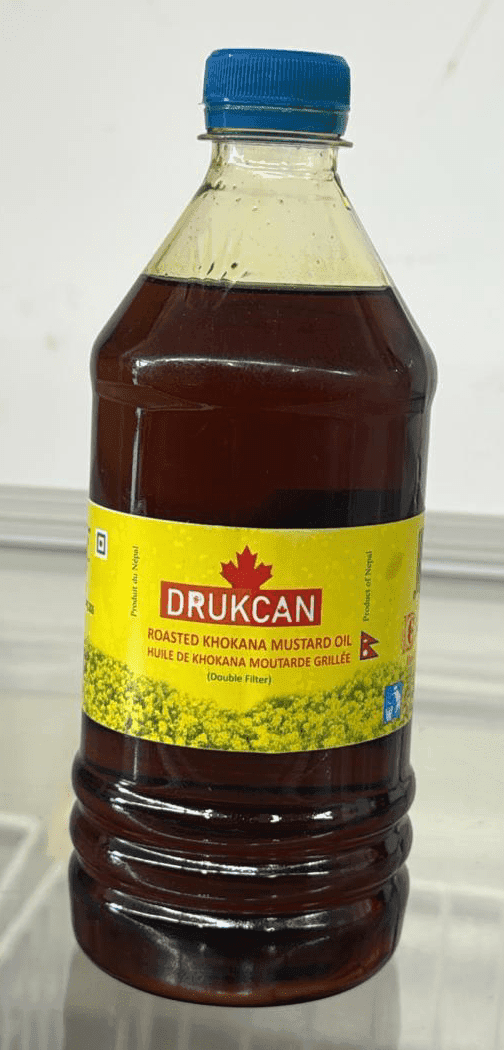
We carry both styles. DRUKCAN Pure Mustard Oil is the classic unroasted version most households use daily, while Roasted Khokana Mustard Oil is pre-toasted for an even deeper, smokier flavour straight out of the bottle. We go into a lot more depth on the roasted version in our Khokana mustard oil guide, and if you are curious about the fat profile and any health questions around erucic acid, our mustard oil health facts guide covers that in plain language.
Sunflower oil: the everyday neutral workhorse
Sunflower oil is the oil most Nepali and Indian households actually cook with day to day. It is light, neutral, and does not fight with your spices.
That neutrality is the whole point. When you are making a simple aloo tarkari or frying pakoda for guests, you want the vegetables and the masala to be the star, not the oil. Our Sunflower Oil, 3L is exactly the everyday jug most households go through in a month or two.
It also handles higher, sustained heat well, which matters if you are deep-frying anything for a stretch, from sel roti at Tihar to a big batch of samosa for a family gathering.
Canola oil: light, mild and increasingly the default in Canada
Canola oil is a Canadian story in itself: it was developed and named here, and it has become the default cooking oil in a lot of Canadian pantries, Nepali and Indian households included.
Flavour-wise it sits close to sunflower oil: mild, light, barely there. Where it edges ahead for some cooks is fat profile, since canola tends to run lower in saturated fat than most other cooking oils.
Capri Canola Oil, 3L works anywhere you would use sunflower oil: everyday tarkari, baking, shallow frying. Many households simply buy whichever of the two is on sale that week and use them interchangeably.
Which oil for which dish
A simple rule that works in most Nepali kitchens: reach for mustard oil when the dish is meant to taste sharp and traditional, and reach for sunflower or canola when you want the oil to disappear into the background.
Making achar of any kind, from mango to lapsi to a quick radish pickle? Mustard oil, always. The same goes for a proper mustard-seed tadka: toast a spoonful of black mustard seeds in hot mustard oil until they pop, and pour that over dal or gundruk ko jhol for a completely different dish than the same recipe made with a neutral oil.
Deep-frying dough, like sel roti or the samosa in our how to make momo guide, is better in sunflower or canola: mustard oil's stronger flavour can overwhelm delicate dough. And for something like aloo ko achar, a small drizzle of raw or lightly warmed mustard oil right at the end is what gives it that unmistakable tang.
Buying and storing your oils
Cooking oil is heavy and awkward to carry, which is exactly the kind of item worth ordering rather than lugging home. Danphe Stores ships mustard, sunflower and canola oil (along with the rest of our cooking oils and spices shelf) to all ten provinces and the territories, with same-day delivery by phone if you are in Metro Vancouver.
Keep mustard oil in a cool, dark cupboard away from direct sunlight, it keeps its pungency longer that way. Sunflower and canola oil are more forgiving but still do best sealed and out of direct heat, especially once you have opened the 3L jug.
If you are building out a full Nepali or Indian pantry rather than just restocking oil, our Nepali and Indian grocery delivery guide is the best starting point for everything else you will want alongside it.

Frequently asked questions
Is mustard oil healthier than canola oil?
They are simply different. Mustard oil is higher in monounsaturated fat and has a distinct pungency; canola is milder and typically lower in saturated fat. Most Nepali households use both for different dishes rather than picking a single winner. Our mustard oil health facts guide breaks down the details, including the erucic acid question that comes up often.
Can I use canola oil instead of mustard oil in an achar recipe?
You can, but the flavour will be noticeably milder and the achar will lack that classic sharp tang. If a recipe specifically calls for mustard oil, like most pickle (achar) recipes do, it is worth using the real thing at least once to taste the difference.
What is the difference between plain mustard oil and roasted (Khokana-style) mustard oil?
Plain mustard oil like our DRUKCAN Pure Mustard Oil needs to be heated by you until it stops smelling raw. Roasted mustard oil, such as Roasted Khokana Mustard Oil, is already toasted at the source for a deeper, smokier flavour you can use straight away.
Which oil is best for deep-frying sel roti or momo?
Sunflower or canola oil. Both hold up well at sustained frying temperatures and, unlike mustard oil, will not compete with the flavour of the dough.
Do you ship cooking oil across Canada, not just Metro Vancouver?
Yes. Standard delivery runs $5 to $10, and it is free from $35 in central Metro Vancouver, with 5 to 10 business day shipping to every province and territory. Same-day delivery within Metro Vancouver is available by calling 236-471-5891.
What size bottles of mustard oil do you carry?
We stock DRUKCAN Pure Mustard Oil in 1L for everyday cooking and Roasted Khokana Mustard Oil in 500ml for a stronger, ready-toasted flavour. Both are on the cooking oils shelf alongside our sunflower and canola options.
Shop the pantry
Authentic Himalayan staples, delivered anywhere in Canada.
Keep reading
Nepali & Indian Grocery Delivery Across Canada
One Vancouver shop, one nationwide delivery run: real Nepali and Indian groceries shipped coast to coast.
Read the guideKhokana Roasted Mustard Oil: Nepal's Signature Oil
The pungent, roasted oil that gives Nepali achar and tarkari their signature bite, explained and delivered anywhere in Canada.
Read the guideMustard Oil Health Facts: What to Know
Mustard oil brings a high smoke point, mostly monounsaturated fat, and centuries of kitchen wisdom to one bottle.
Read the guideIndian & Nepali Pickles (Achar): Mango, Lemon, Mixed
No dal bhat plate is complete without a spoonful of achar, and this is the guide to picking the right jar.
Read the guide