
Food & Nutrition Guides
Khokana Roasted Mustard Oil: Nepal's Signature Oil
Walk into any Nepali kitchen and you will smell it before you see it: that sharp, roasted, faintly smoky oil going into a batch of achar or sizzling under cumin seeds. That is Khokana mustard oil, named for the old Newari town outside Kathmandu famous for pressing it. Here is what makes it different, how to cook with it, and how to get it delivered to your door anywhere in Canada.
By Bishnu Koirala · Founder & CEO
Published
On this page
What Makes Khokana Mustard Oil Different
Khokana is a small Newari town just south of Kathmandu, and for generations it has been Nepal's centre for pressing mustard seed into oil. The name stuck the way "Champagne" or "Darjeeling" sticks: say Khokana to a Nepali cook and they know exactly what you mean, a dark amber oil with a peppery, almost horseradish-like bite that mellows into a warm nuttiness once it hits a hot pan.
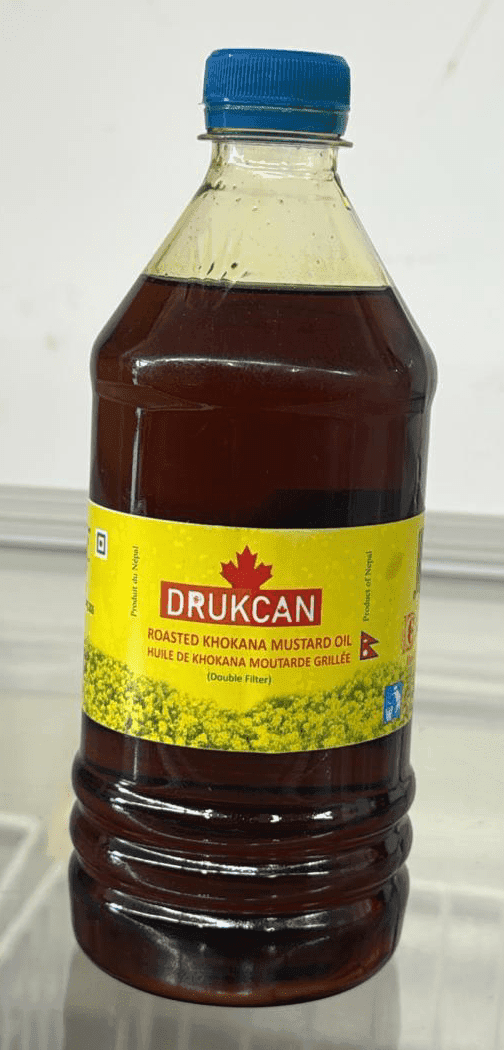
Our Khokana Roasted Mustard Oil from DRUKCAN is roasted before pressing, which is what gives it that deeper, toastier edge compared to a plain cold-pressed oil. It is the single most requested item in our cooking oils aisle from customers who grew up on real Nepali achar and could never find it quite right with anything from a regular Canadian grocery aisle.
If you are new to Nepali and Indian pantries altogether, our Nepali & Indian grocery delivery across Canada hub is a good starting point before you dive into mustard oil specifically.
Roasted vs Pure: Which Bottle Do You Need
We carry two mustard oils and the difference matters more than the label suggests. The roasted Khokana Mustard Oil is toasted first, giving it a rounder, slightly sweeter pungency that Nepali households lean on for achar and everyday tarkari (vegetable curry).
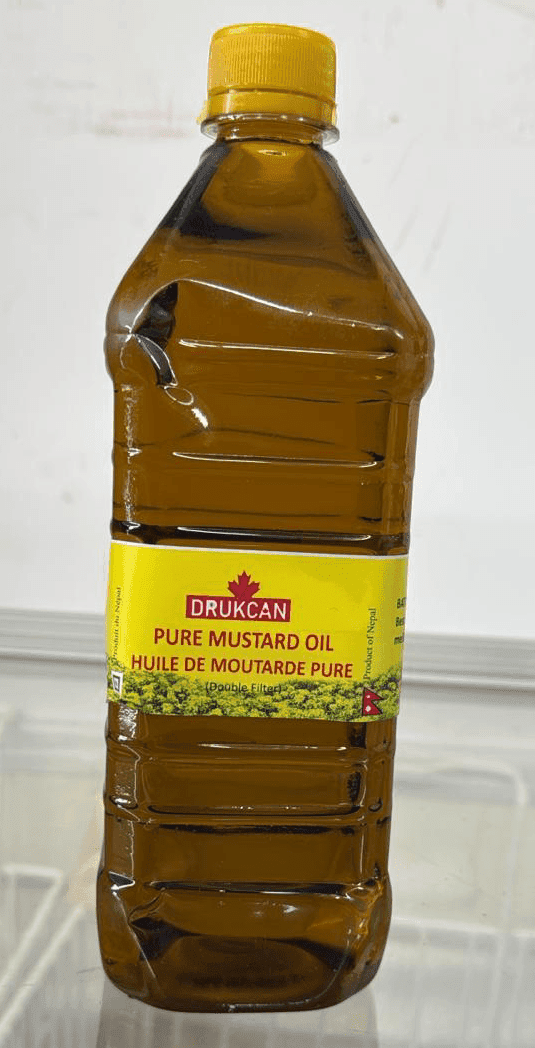
Our Pure Mustard Oil is the straight cold-pressed version, sharper and more assertive, closer to what you would find labeled "kachi ghani" in an Indian kitchen. It is the one to reach for when a recipe wants that raw, nose-clearing heat, like a quick fish fry or a Bengali-style mustard oil drizzle at the end of cooking.
If you cook across both Nepali and Indian traditions and want the full breakdown of how mustard oil stacks up against sunflower and canola, we wrote a whole comparison in Mustard vs Sunflower vs Canola Oil for Nepali Cooking.
Cooking With Mustard Oil: Tarkari, Tempering, and Beyond
The classic move is heating the oil until it just starts to shimmer and lightly smoke, which cooks off the raw sharpness before you add your tadka (tempering) of cumin, mustard seed, or dried chili. Skipping this step is the number one reason people find mustard oil "too strong": raw, it is punchy; heated properly, it turns rich and savoury.
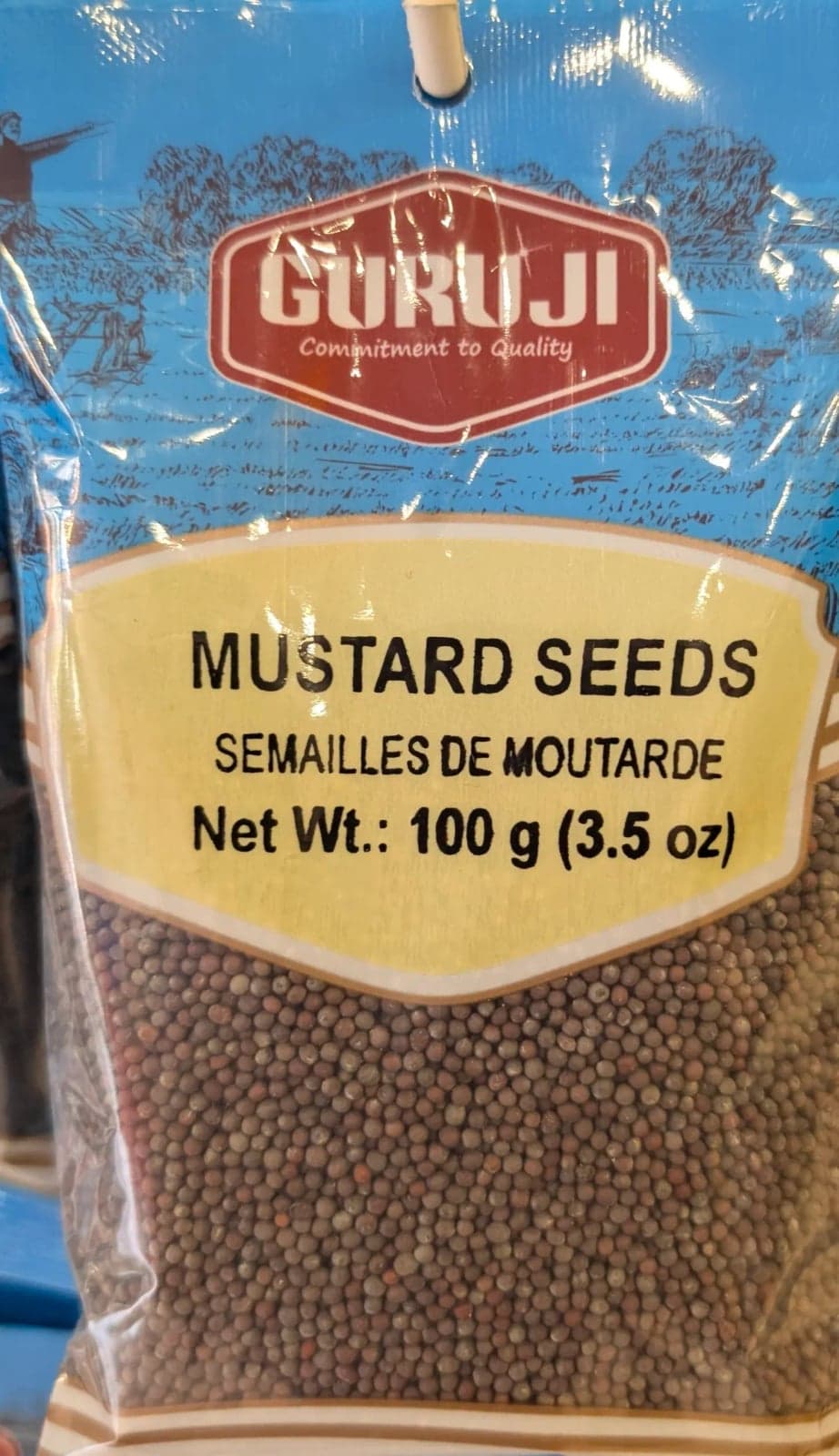
For that tempering step, keep a jar of black mustard seeds on hand. They pop and release a nutty aroma the second they hit hot oil, and pairing mustard seed with mustard oil is a very deliberate, very Nepali double-down on flavour, not a coincidence.
It also shows up constantly across our spices & masala shelf as an ingredient other blends are built around, and if you are still assembling a broader Nepali or Indian spice kit, our guide to garam masala and everyday Indian spices is a solid companion piece.
Pickling: The Real Reason Nepali Kitchens Keep It Stocked
Ask any Nepali home cook why mustard oil never runs out in their kitchen and the answer is usually achar, not curry. Mustard oil is the traditional preserving medium for Nepali pickles because its natural pungency and antimicrobial quality help keep vegetables, lemons, and fruit shelf-stable for months without refrigeration.
You can see this in action in our pickles (achar) selection: our Mango Pickle and Mixed Pickle are both built on a mustard oil base, which is exactly why they taste sharper and more alive than a vinegar-based Western pickle.
If you want to make your own batch at home with fresh vegetables and a splash of roasted mustard oil, our Indian & Nepali Pickles (Achar): Mango, Lemon, Mixed guide walks through ratios and technique, and Nepali Achar Types Compared helps you decide which style to start with.
Storage, Smoke Point, and Everyday Use
Mustard oil has a high smoke point, well above most vegetable oils, which makes it forgiving for pan-frying, sekuwa-style grilling, and deep frying pakauda without breaking down or turning bitter. Store it in a cool, dark cupboard rather than next to the stove; heat and light are what dull its flavour over time, not age itself.
A well-sealed bottle keeps for a long time, so it is worth ordering the larger size if mustard oil is already a staple in your cooking rather than an occasional ingredient. We have customers across the country who order two bottles at a time precisely because reordering shipping takes a few days.
For the health side of the conversation, particularly around erucic acid and why mustard oil is sold for culinary use in Canada, we cover it directly in Mustard Oil Health Facts: What to Know.
Mustard Oil vs the Rest of Your Oil Shelf
Most Canadian pantries default to a neutral oil like our Sunflower Oil for everyday cooking, and there is nothing wrong with that for pancakes or scrambled eggs. But swap it in for a Nepali dal or an Indian sabji and you will notice the dish tastes flatter, missing the pungent backbone mustard oil provides.
Think of it less as a replacement for your everyday oil and more as a specialty ingredient you keep alongside it, the way you would keep both olive oil and butter in a Western kitchen. A little goes a long way, especially in the roasted version, which is concentrated enough that a tablespoon or two changes an entire pot of tarkari.
Frequently asked questions
Is mustard oil legal to buy and cook with in Canada?
Yes. Mustard oil sold in Canada for culinary use, including our Khokana Roasted Mustard Oil, is fully legal to buy and cook with. The restrictions some people have heard about apply to certain labeling rules in the US market, not to Canadian retail.
What is the difference between roasted and pure mustard oil?
Roasted mustard oil, like our Khokana Roasted Mustard Oil, is toasted before pressing for a rounder, deeper flavour used in everyday Nepali cooking. Pure Mustard Oil is cold-pressed and sharper, closer to what many Indian recipes call for.
Can I use mustard oil for deep frying?
Yes, mustard oil has a high smoke point and handles deep frying, sekuwa-style grilling, and pan searing well. Just heat it until it loses its raw sharpness before adding other ingredients.
Why do Nepali pickles always use mustard oil?
Mustard oil's natural pungency helps preserve vegetables and fruit without refrigeration, which is why our pickles (achar) like Mango Pickle and Mixed Pickle are made with it rather than a neutral oil.
How is mustard oil different from sunflower or canola oil?
Mustard oil is pungent and assertive where sunflower oil and canola are neutral and mild. It is used as a flavour ingredient in Nepali and Indian cooking, not as an everyday all-purpose oil. See our full Mustard vs Sunflower vs Canola Oil comparison for details.
Do you ship mustard oil across Canada?
Yes. We ship from our Vancouver store to all 10 provinces and 3 territories, typically 5 to 10 business days, free over $35 within central Metro Vancouver. Same-day delivery is available in Metro Vancouver by calling 236-471-5891.
Shop the pantry
Authentic Himalayan staples, delivered anywhere in Canada.
Keep reading
Nepali & Indian Grocery Delivery Across Canada
One Vancouver shop, one nationwide delivery run: real Nepali and Indian groceries shipped coast to coast.
Read the guideMustard vs Sunflower vs Canola Oil for Nepali Cooking
Pungent mustard, neutral sunflower, or light canola: here is which oil actually belongs in your Nepali kitchen, and when.
Read the guideMustard Oil Health Facts: What to Know
Mustard oil brings a high smoke point, mostly monounsaturated fat, and centuries of kitchen wisdom to one bottle.
Read the guideIndian & Nepali Pickles (Achar): Mango, Lemon, Mixed
No dal bhat plate is complete without a spoonful of achar, and this is the guide to picking the right jar.
Read the guide