
Food & Nutrition Guides
Garam Masala & Everyday Indian Spices
Garam masala is the warm, fragrant backbone of Nepali and Indian cooking, but it is only one jar in a whole spice drawer. Here is what to actually keep stocked, what each blend does, and where to buy real DRUKCAN masala online in Canada.
By Bishnu Koirala · Founder & CEO
Published
On this page
What garam masala actually is (and why every household has its own version)
Garam masala means "warm spice mix" in Hindi and Nepali, and that is exactly what it is: a blend of whole spices, usually cinnamon, cardamom, cloves, black pepper, cumin and coriander, roasted and ground together so they release their oils. It is not a single fixed recipe. Every family, every region, every brand tilts the ratio a little differently, which is why one tin can taste sweeter and another sharper.
In our own kitchen we finish curries with it rather than cook with it from the start. A pinch of DRUKCAN Garam Masala stirred in during the last two minutes of cooking wakes the whole pot up. Add it too early and the heat cooks off the fragrance before it ever reaches the plate.
If you are new to Nepali and Indian pantries and want the full picture beyond garam masala, our Indian grocery store online in Canada guide is the best starting point. It maps out the whole shelf, from lentils to rice to spice.
The everyday spice lineup: turmeric, cumin, coriander
Behind garam masala sit three spices that do the daily heavy lifting. Turmeric (haldi) goes into almost every savoury dish for colour, earthiness, and its well-known anti-inflammatory reputation. We stock DRUKCAN Turmeric Powder, milled from Nepali haldi with a deep, warm orange that lighter supermarket turmeric rarely matches.
Cumin (jeera) is the smoky base note under dal, rice, and vegetable dishes. Keep both forms on hand: Cumin Seeds for tempering in hot oil (the tadka step that starts most Nepali dal), and Cumin Powder for stirring straight into a simmering curry when there is no time for a tadka.
Coriander seed rounds things out with a citrusy, slightly sweet backbone. Coriander Seeds are usually dry-roasted and ground fresh at home, though pre-ground coriander works fine on a weeknight. Together, turmeric, cumin, and coriander form the base of nearly every dal and sabji, and they show up again in our dal & lentils recipes.
Meat and chicken masala: garam masala's cousins
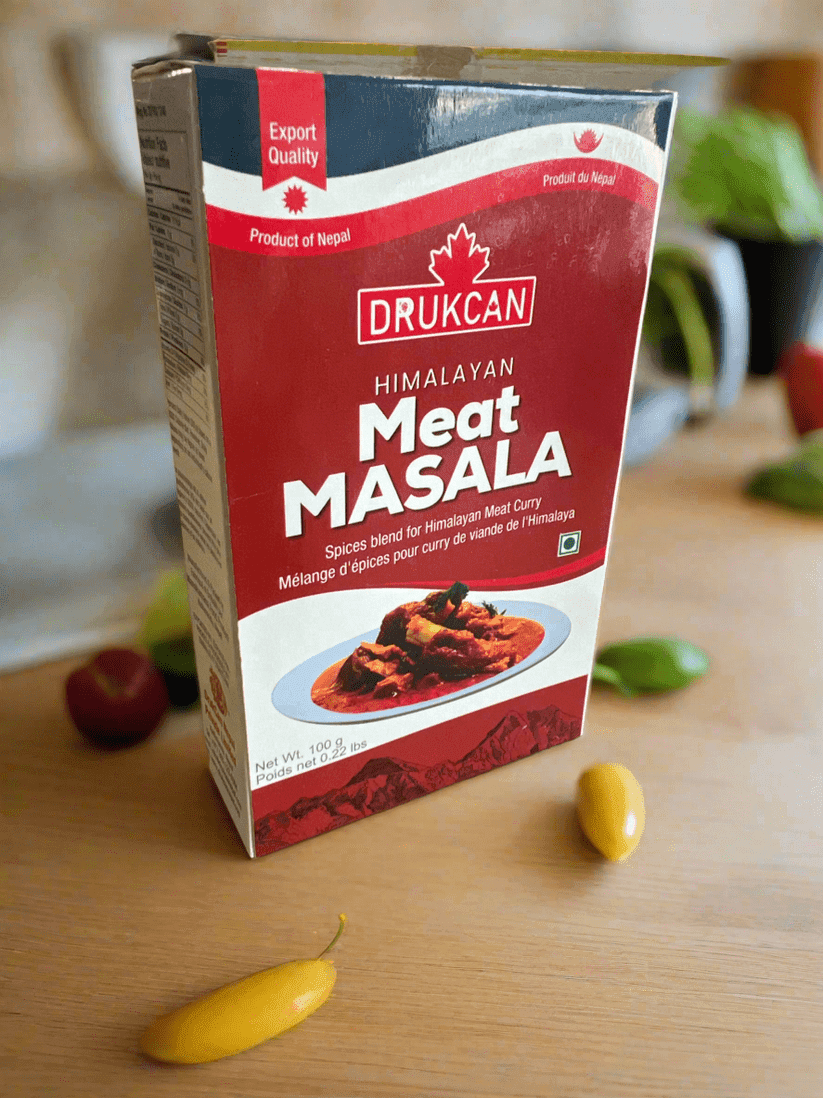
Garam masala is the general-purpose blend, but Nepali kitchens usually reach for something more specific once meat is involved. DRUKCAN Meat Masala leans heavier on black pepper, bay leaf, and dried chilli, built for mutton and goat curries that need to stand up to slow cooking.
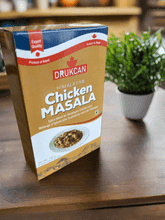
DRUKCAN Chicken Masala is lighter and a touch tangier, tuned for chicken's milder flavour so the spice doesn't overpower it. If you keep only three tins in your cupboard, garam masala, meat masala, and chicken masala cover almost every curry a Nepali or Indian household cooks in a normal week.
These blends also do double duty in sekuwa-style grilling and in the marinades behind dishes like choila, where a well-balanced masala matters as much as the meat itself.
Panch phoran and the regional blends worth trying
Not every spice mix is meant to be ground. DRUKCAN Panch Phoran is a Bengali-style five-spice blend, whole cumin, fennel, fenugreek, mustard, and nigella seeds, tossed straight into hot oil to flavour vegetables, dal, and pickled dishes. It is a different technique from garam masala entirely: no grinding, no simmering in, just a quick sizzle at the very start of cooking.
If you cook a lot of vegetable sides (sabji, torkari, or aloo dishes), keeping panch phoran next to your garam masala gives you two very different flavour directions from the same spice drawer. It pairs particularly well with mustard oil; if you haven't compared cooking oils before, our mustard vs sunflower vs canola oil guide explains why Nepali cooks reach for mustard oil specifically with these whole-spice tempers.
For festival cooking, spice choices shift again. Dashain and Tihar recipes often call for a heavier hand with whole spices and a specific masala per dish; our Dashain foods guide walks through what actually goes into the pot during the festival season.
Buying and storing spices so they stay potent
Ground spice loses fragrance fast, within months, not years, once the tin is opened and exposed to air and light. Buy smaller 100g packs more often rather than one giant bag that sits half-used for a year. That is one reason we stock most of our spices & masala in 100g to 200g sizes: it is the amount a household actually uses while it's still fragrant.
Store spice tins away from the stovetop. Heat and steam from cooking are the fastest way to dull a good garam masala. A cool cupboard shelf, lid on tight, keeps DRUKCAN blends tasting sharp for a lot longer than a rack mounted right above the burner.
If you order from us in Vancouver same-day delivery is available by phone, and everywhere else in Canada we ship standard delivery in 5 to 10 business days, free from $35 in central Metro Vancouver. Spice tins travel well and hold up fine over that transit time.
Frequently asked questions
What is the difference between garam masala and curry powder?
Curry powder is a British-Indian invention, usually turmeric-forward and always includes turmeric plus a fixed blend meant to season a dish from the start. Garam masala rarely includes turmeric, is more about cinnamon, cardamom, and clove, and is typically added at the end of cooking to finish a dish rather than build its base flavour.
Can I use garam masala instead of meat masala or chicken masala?
In a pinch, yes, but you'll notice the difference. Garam masala is more floral and general-purpose, while DRUKCAN Meat Masala and DRUKCAN Chicken Masala are formulated with the specific protein in mind, heavier pepper and chilli for red meat, a lighter tangier profile for chicken. If you cook a lot of curry, it's worth keeping all three.
Do I need whole spices or is ground fine?
Both have a place. Ground turmeric, cumin, and coriander are convenient for everyday cooking and stirring into a simmering pot. Whole Cumin Seeds and Coriander Seeds are better for tempering (tadka) in hot oil, where the whole seed blooms and releases more aroma than a pre-ground version would.
What is panch phoran used for exactly?
Panch phoran is a Bengali five-spice blend of whole cumin, fennel, mustard, fenugreek, and nigella seeds. It's added whole to hot oil at the start of cooking, not ground in like garam masala, and is especially good with vegetable sabji, dal tempering, and pickled dishes. Try DRUKCAN Panch Phoran the next time you make a simple vegetable side.
How long do these spices stay fresh once opened?
Ground spices are best used within about 6 months of opening for full fragrance, whole spices like cumin and coriander seeds hold their flavour a bit longer, closer to a year, if kept airtight and away from heat. Buying smaller 100g tins, like we stock in spices & masala, keeps you cycling through fresh stock rather than sitting on a half-used bag.
Do you ship garam masala and spices across Canada?
Yes. We ship nationwide to all 10 provinces and 3 territories from our shop on East Hastings in Vancouver, standard delivery runs 5 to 10 business days ($5 to $10, free from $35 in central Metro Vancouver), with same-day delivery available in Metro Vancouver by phone at 236-471-5891. For the full pantry beyond spices, see our Indian grocery store online in Canada guide.
Shop the pantry
Authentic Himalayan staples, delivered anywhere in Canada.
Keep reading
The Best Indian Grocery Store Online in Canada
Basmati, dal, garam masala, Haldiram’s, Britannia, Wagh Bakri, rasgulla, Dabur — the Indian pantry, delivered anywhere in Canada.
Read the guideMomo Masala: The Secret to Nepali Dumplings
One spoon of the right masala is the difference between a good momo and a forgettable one.
Read the guideIndian Dal & Lentils: Toor, Moong, Chana, Rajma, Masoor
Toor for the everyday pot, moong for khichdi, chana for a thick gravy, rajma for Sunday chawal, masoor for a quick weeknight dal: here's which is which.
Read the guideKhokana Roasted Mustard Oil: Nepal's Signature Oil
The pungent, roasted oil that gives Nepali achar and tarkari their signature bite, explained and delivered anywhere in Canada.
Read the guide