
Recipes
Pani Puri Recipe: Golgappa at Home
Pani puri (also called golgappa, phuchka or paani batasha depending where you grew up) is the one street snack everyone in South Asia has an opinion about. This recipe walks through the puri, the pani and the filling so you can put together a full batch at home, no street cart required.
By Bishnu Koirala · Founder & CEO
Published
On this page
What Pani Puri Actually Is
Pani puri is a hollow, crisp-fried shell (the puri) filled with spiced potato and chickpeas, then dunked in a cold, tangy-spicy water (the pani) and eaten in one bite. It is street food built for speed: you eat it standing up, one after another, before the shell goes soft.
Every region calls it something different. Golgappa in Delhi, phuchka in Kolkata, paani batasha in parts of Bihar, and pani puri pretty much everywhere else including here in Vancouver. The core idea never changes: crunch, then a flood of cold spiced water.
If you have already read our pani puri (golgappa) kit guide, this recipe is the hands-on companion, the actual method, start to finish, using what is realistically available at an Indian grocery store in Canada.
Ingredients You'll Need
For the puri (makes about 30-35 small shells): 1 cup sooji (semolina), 2-3 tablespoons all-purpose flour (maida), a pinch of baking soda, water to knead, and oil for deep frying. The semolina is what gives the shell its snap; the small bit of maida helps it puff up round.
For the filling: 3-4 boiled and mashed potatoes, 1 cup boiled kaalo chana (black chickpeas), finely chopped onion (optional), chopped coriander, and a squeeze of lemon. Boiled kaalo chana gives the filling real bite, which is why we prefer it over plain potato alone. A spoon of besan (gram flour) mixed into the filling also helps it bind if you like a slightly firmer bite.
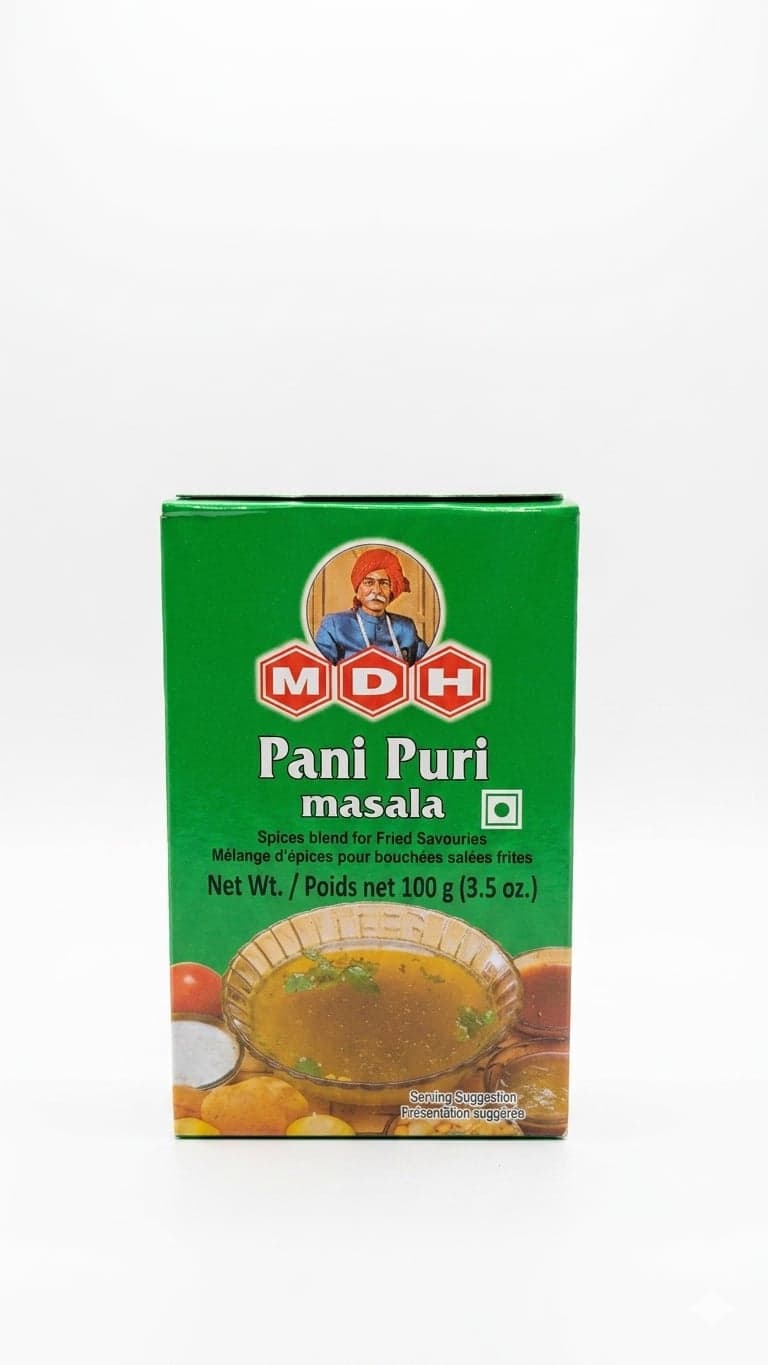
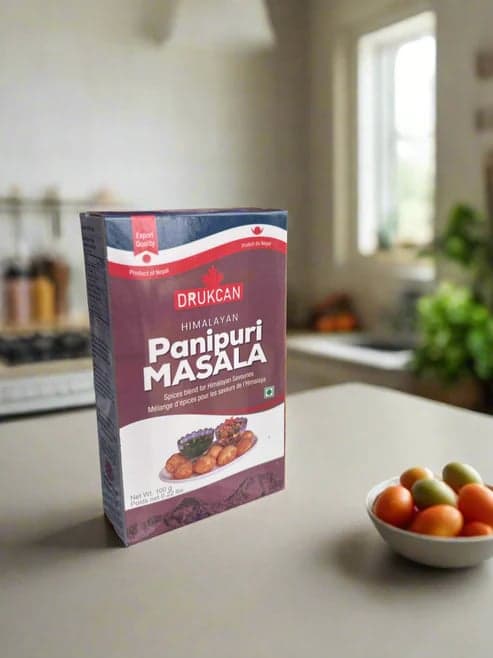
For the pani: a big bunch of mint and coriander leaves blended with green chilies and ginger, cold water, a spoon of MDH Pani Puri Masala or DRUKCAN Pani Puri Masala, tamarind pulp (softened imli balls work well for this), black salt, and roasted cumin powder.
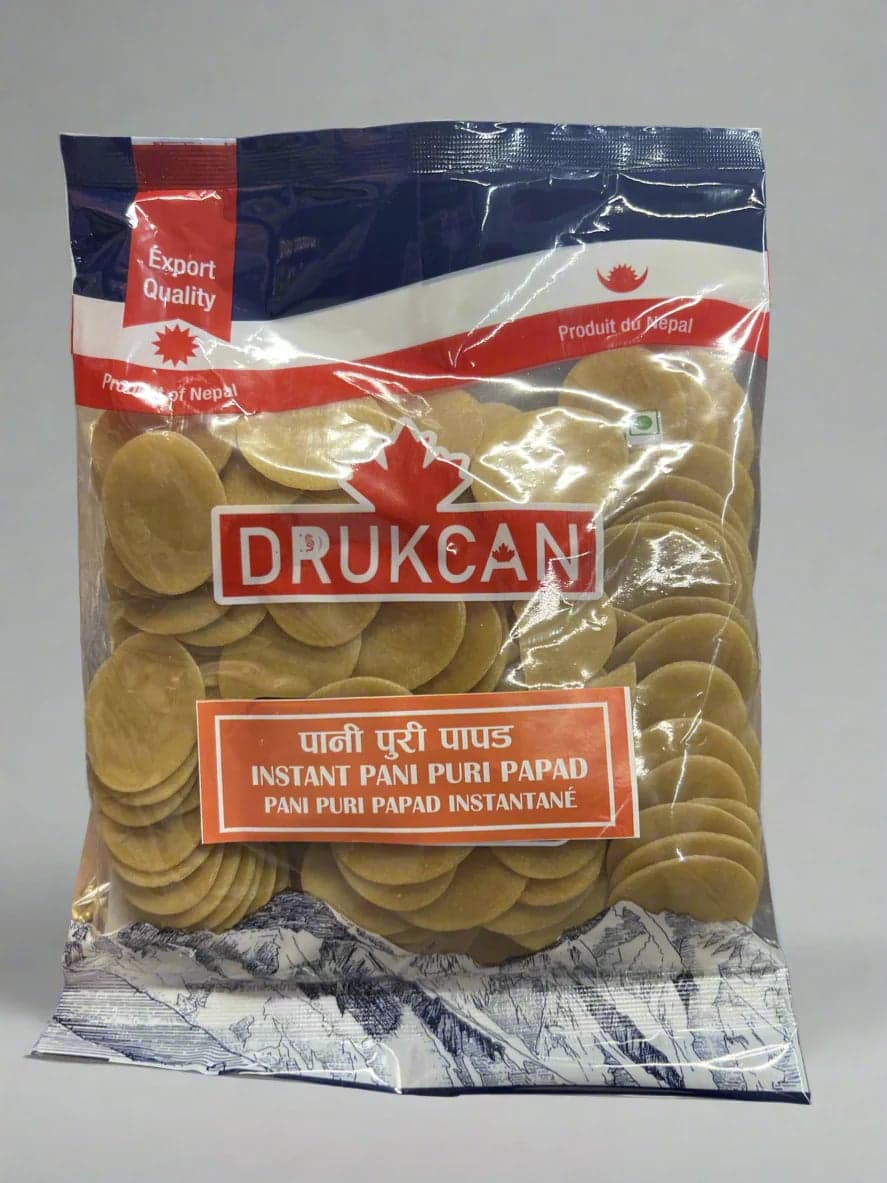
Short on time? Ready-made pani puri chips are already fried and crisp, so you can skip the frying step entirely and jump straight to the pani and filling. It is a completely fair shortcut on a weeknight.
Making the Puri Shells
Knead the semolina and maida with a pinch of baking soda and just enough water to form a stiff, tight dough (stiffer than roti dough). Cover it with a damp cloth and let it rest for 20-30 minutes; this rest is what makes the puri puff properly.
Roll the dough thin and cut small circles, about 2 inches across, using a lid or cookie cutter. Keep the rolled circles covered so they don't dry out and crack while you work.
Heat oil to medium-high and slide in the puris a few at a time. Press each one gently with the back of a slotted spoon the moment it hits the oil; this is the trick that makes it balloon into a hollow shell instead of frying flat. Fry until golden and crisp, then drain.
If this step feels fussy the first time, that's normal. Most people in Nepal and India buy their puri shells ready-made too, which is exactly why pani puri chips exist on the shelf next to the snacks at any Nepali or Indian grocer.
The Pani: Getting the Flavour Right
Blend mint, coriander, green chili and ginger with a little water into a smooth green paste. Strain it if you want a cleaner-looking pani, though most home cooks don't bother.
Mix that green paste into cold water, then stir in a spoon of pani puri masala, tamarind pulp from softened imli, black salt and roasted cumin powder. Taste and adjust: more tamarind for sour, more masala for heat, more black salt for that distinct tang.
Chill the pani for at least an hour before serving. Warm pani is a genuine letdown; it needs to be ice cold to work against the hot, crisp shell.
Both MDH and DRUKCAN masalas do the heavy lifting here, so you don't need to hunt down a dozen individual spices from the spices & masala aisle. One spoon gets you most of the way there.
Filling and Assembly
Mash the boiled potatoes coarsely, not smooth, you want some texture. Fold in the boiled kaalo chana, chopped coriander, a little chaat masala if you have it, and a squeeze of lemon.
To assemble, tap a small hole in the top of each puri with your thumb, spoon in a bit of the potato-chana filling, then dunk the whole thing in the cold pani for a second and eat immediately. Don't stack finished puris; they go soggy fast.
This is very much a team-effort snack. Set the shells, filling and pani out separately and let everyone assemble their own at the table, the way it's usually eaten off a cart anyway.
Tips from a Nepali-Canadian Kitchen
If you're doubling the batch for a gathering, fry the puris a day ahead and store them in an airtight container once fully cooled; they'll stay crisp. Make the pani fresh the day of, though, since the herbs lose their punch overnight.
Pani puri pairs naturally with other chaat-style Nepali and Indian street snacks. If you like this style of cooking, our aloo ko achar recipe (Nepali potato salad) uses a similar spice base and is worth trying the same week, and leftover tamarind and spice work well in an achar too.
Serve pani puri alongside a simple dal bhat spread for a bigger family meal, or set out a bowl of Haldiram's snacks for anyone who wants something crunchy while the pani chills.
For the full range of masalas, flours and pickles that make up an Indian and Nepali pantry, our Indian grocery store in Canada guide is a good starting point if you're still building yours out.
Frequently asked questions
What is the difference between pani puri and golgappa?
Nothing, really; they're the same snack under different regional names. Golgappa is common in Delhi and North India, pani puri is used more broadly, and phuchka is the Bengali version with a slightly different pani. The shell, the pani and the filling are the same basic idea everywhere.
Can I buy the puri shells ready-made instead of frying them?
Yes. Pani puri chips are pre-fried and shelf-stable, so you can skip the dough and frying steps entirely. Many home cooks in Nepal and India do the same thing on a regular weeknight.
Why did my puri shells turn out flat instead of hollow?
Usually one of three things: the dough wasn't stiff enough, it didn't rest long enough before rolling, or the oil wasn't hot enough when the puri went in. Press each puri gently with a slotted spoon the second it hits the hot oil; that press is what forces it to puff into a shell.
What can I use instead of pani puri masala if I don't have any?
You can build the flavour from individual spices (roasted cumin, black salt, dry mango powder, black pepper), but it takes longer to balance. MDH or DRUKCAN pani puri masala gets you there in one spoon, which is why most kitchens keep a jar on hand.
Is pani puri vegetarian and vegan?
Yes, in its classic form it's entirely plant-based: potato, chickpeas, semolina shells and a herb-tamarind water. Just check that any pre-made puri or masala you buy hasn't been made with ghee, though most of the shelf-stable brands sold at Danphe are plain vegetable oil based.
Does Danphe Stores ship pani puri masala and puri chips across Canada?
Yes. Danphe Stores ships nationwide across all provinces and territories, with free delivery from $35 in central Metro Vancouver and standard delivery of 5-10 business days elsewhere. Same-day delivery is available within Metro Vancouver by phone at 236-471-5891.
Shop the pantry
Authentic Himalayan staples, delivered anywhere in Canada.
Keep reading
The Best Indian Grocery Store Online in Canada
Basmati, dal, garam masala, Haldiram’s, Britannia, Wagh Bakri, rasgulla, Dabur — the Indian pantry, delivered anywhere in Canada.
Read the guidePani Puri (Golgappa) at Home: The Complete Kit
One tangy, spicy shot of pani puri turns any evening into a street-food party, and the whole kit ships across Canada.
Read the guideAloo ko Achar Recipe: Nepali Potato Salad
Boiled potatoes tossed with roasted sesame, timur and a squeeze of lemon: Nepal's tangiest, most addictive potato salad.
Read the recipeBesan (Gram Flour): Uses, Recipes & Where to Buy
One bag of besan makes crispy pakora, silky kadhi, and melt-in-the-mouth ladoo, here's how to use it right.
Read the guide