
Food & Nutrition Guides
Himalayan Green Tea Benefits: Tokla & High-Grown Leaf
Nepal's hill districts grow some of the highest-elevation tea in the world, and green tea is where that leaf shows off best. Here's what's actually in the cup, how Tokla's green tea compares to the black and masala versions on the same shelf, and how to brew it so it doesn't turn bitter.
By Bishnu Koirala · Founder & CEO
Published
On this page
What Makes Himalayan Green Tea Different
Most of the tea Canadians know, the CTC (crush, tear, curl) black tea that goes into a builder's mug or a pot of masala chai, is grown at lower elevation and processed for strength and speed. Himalayan green tea is a different animal.
It's grown in the hill districts of eastern Nepal, mostly around Ilam, Jhapa and Panchthar, where gardens sit anywhere from 1,000 to over 2,000 metres. Cooler air, slower growth and more fog mean the leaf develops more of the compounds that give green tea its character: a lighter body, a grassy-to-vegetal aroma, and a noticeably higher share of catechins (the antioxidant polyphenols green tea is known for) than fully oxidized black tea.
Green tea leaf is picked, then quickly steamed or pan-fired and dried, skipping the long oxidation step that turns black tea leaf dark and tannic. That's the whole trick: less processing keeps more of the leaf's original chemistry intact. If you're curious about the fuller picture of where this tea comes from, we cover the growing regions and grades in Tokla Himalayan Tea from Nepal.
Tokla Green Tea: What's Actually in the Cup
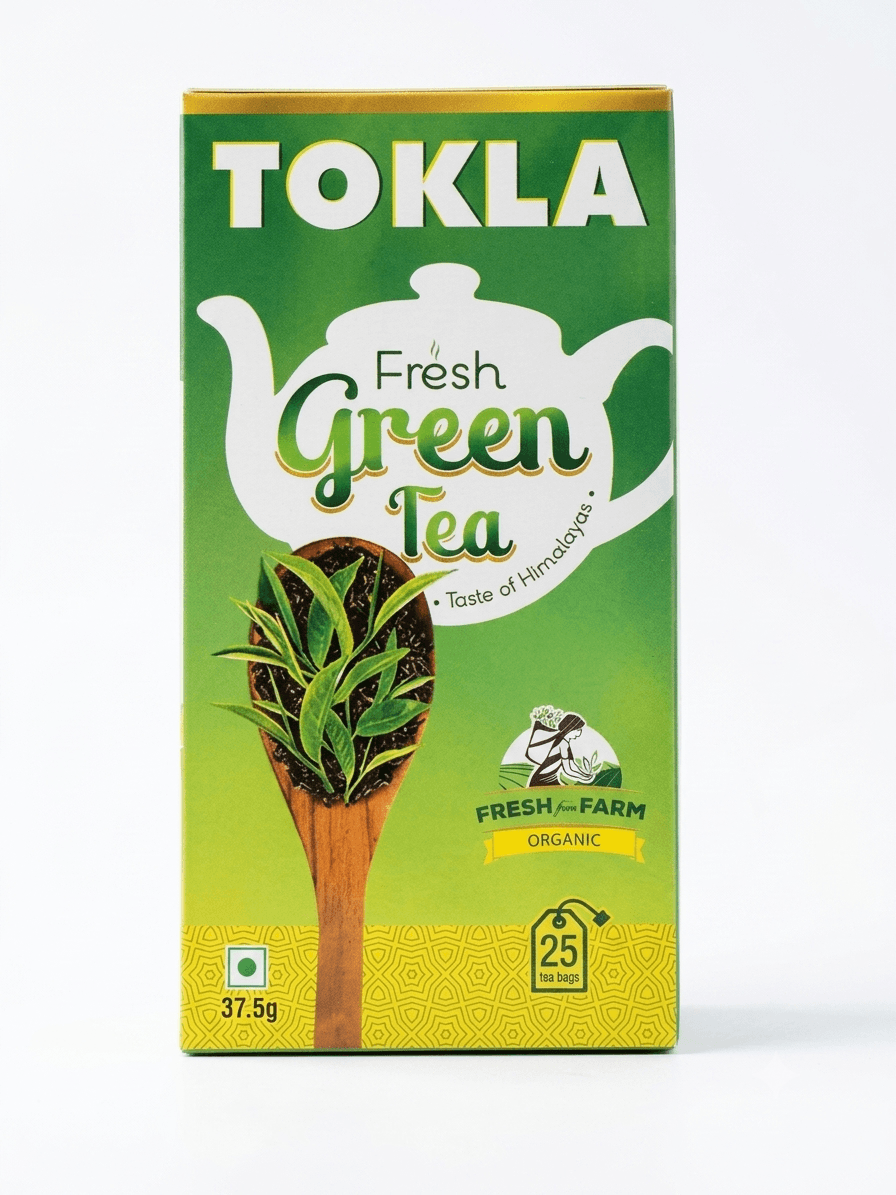
Tokla Green Tea is a straightforward, high-grown leaf tea, no additives, no flavouring, just dried green tea leaf in a 37.5g pack sized for trying it before you commit to a bigger tin.
Per label, green tea leaf itself carries no fat, sugar or protein to speak of; the nutrition comes from what's brewed out of it, mainly polyphenols (catechins like EGCG) and a modest dose of caffeine, generally less per cup than black tea or coffee. That's a big part of why people reach for green tea in the afternoon: enough lift to feel it, not so much that it competes with an evening cup of chiya.
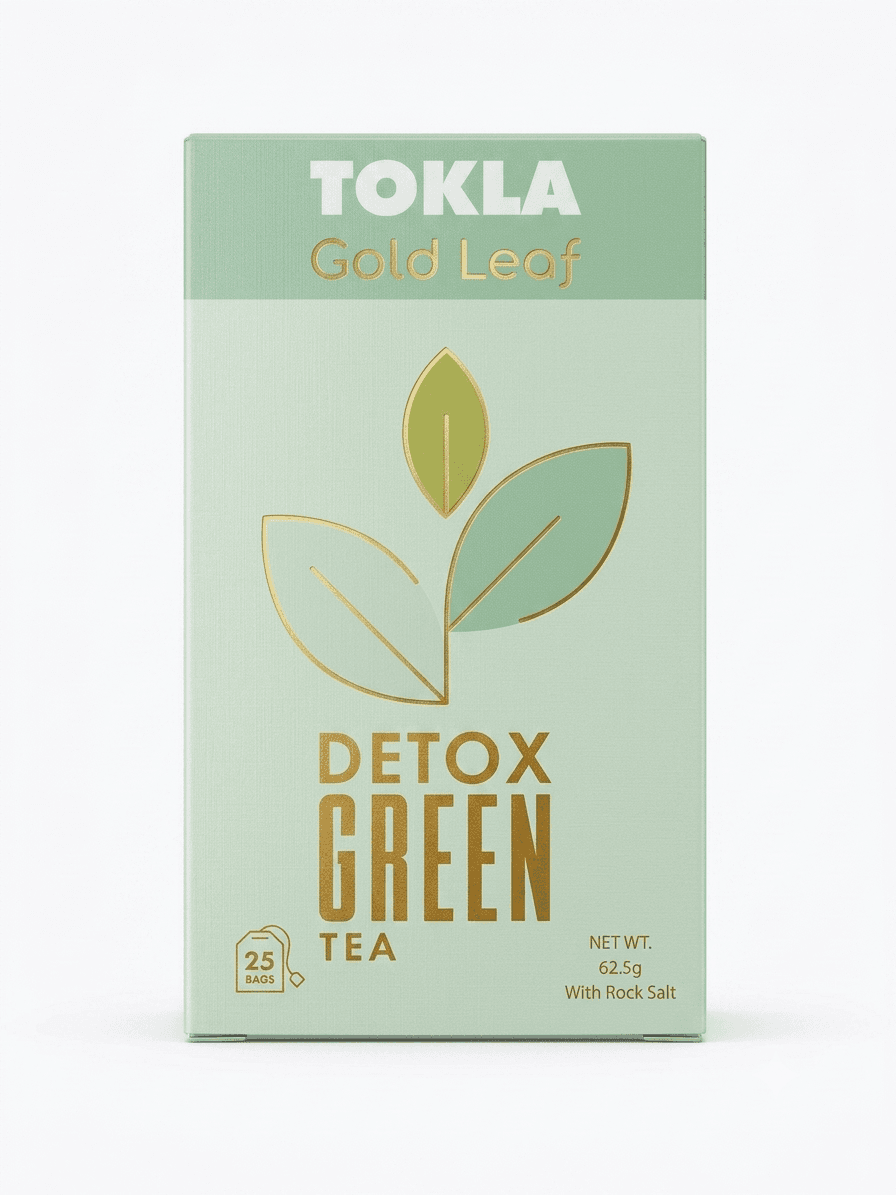
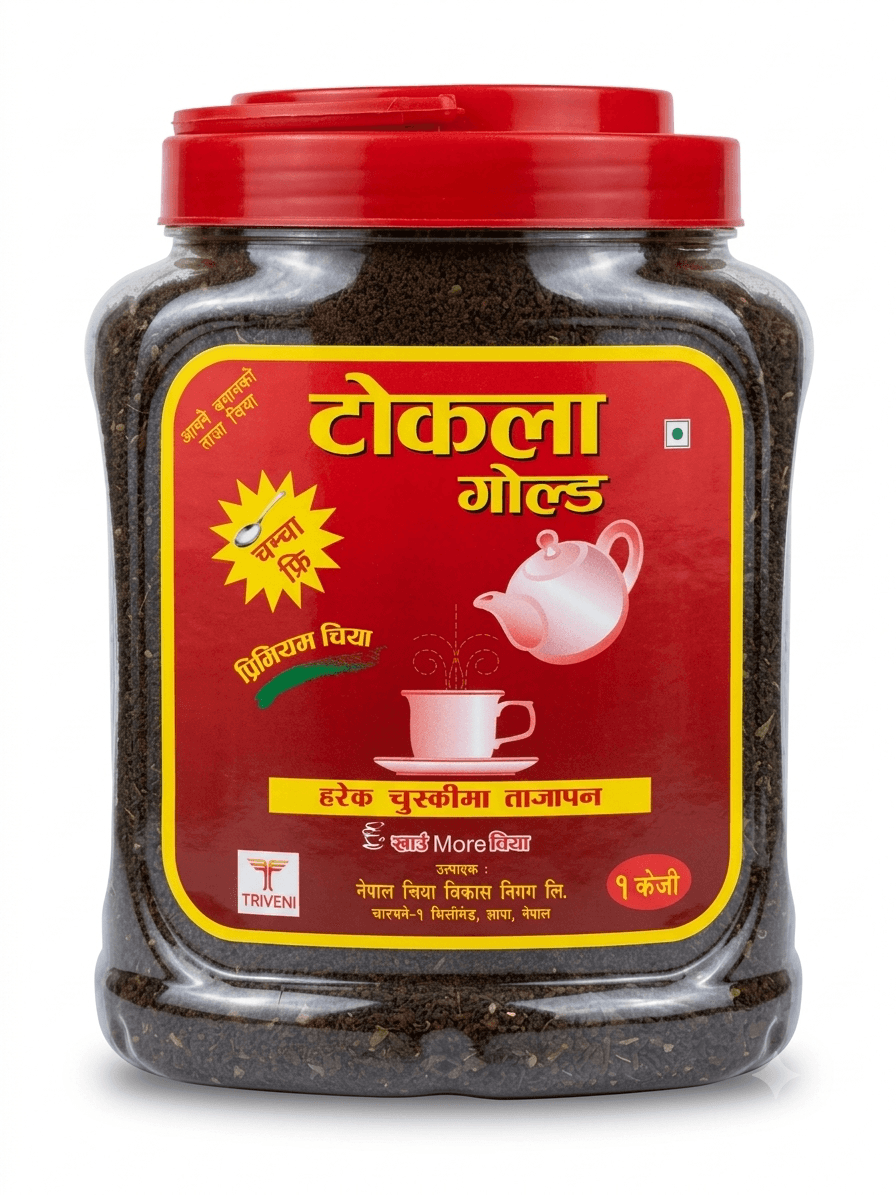
If you want to go up a grade, Tokla Gold Leaf Tea uses a finer, more tender leaf pluck, and the 1kg tin of Tokla Gold Tea is the practical size once green tea becomes a daily habit rather than an experiment.
Green Tea vs Masala Chai: Same Shelf, Different Job
It's worth being honest about what green tea is and isn't. Masala chai, the milk-and-spice tea most Nepali and Indian households actually drink daily, adds calories and sugar from milk and cardamom-clove-ginger simmering, plus whatever sugar goes in the pot. Plain green tea, brewed with water alone, adds essentially nothing: no calories, no sugar, no milk, unless you choose to add them.
That makes it a useful swap on days you want the ritual of a hot cup without the dairy and sugar load of chai. Tokla Masala Tea sits in between: black tea leaf pre-blended with chai spices, still meant to be simmered with milk in the traditional way.
We break down the three styles side by side, including caffeine, strength and how each is traditionally brewed, in CTC vs Green vs Masala Tea: A Chiya Guide. If chai is more your daily driver, the masala chai recipe walks through ratios that actually work with Nepali spice measures, not teaspoons guessed from a Western recipe.
How to Brew Green Tea So It Doesn't Turn Bitter
The single biggest mistake with green tea is using boiling water. Full boil scorches the delicate leaf and pulls out excess tannins, which is what makes green tea taste bitter or grassy in a bad way.
Let water boil, then rest it off the heat for a minute or two before pouring, roughly 80 to 85°C. Steep 2 to 3 minutes for a first cup, not the 5-plus minutes that's normal for a strong CTC black tea. The leaf can usually go a second steep at a slightly longer time, which is standard practice with high-grown orthodox leaf.
A splash of raw honey once the tea has cooled slightly (not stirred in while scalding hot) is the traditional way to soften green tea's edge without reaching for refined sugar.
Where Green Tea Fits in a Nepali Pantry
Green tea earns its place next to the masala chai tin, not instead of it. It's what goes in the pot after a heavy dal bhat meal, or the cup people reach for between the morning and evening chai rounds.
It also travels well: a small pack like the 37.5g Tokla tin fits in a desk drawer or a travel bag, useful if you're the one household member weaning off three cups of milk tea a day. Pair it with a light snack rather than something oily; roasted phool makhana or a handful of bhatmas sadeko works better with green tea's cleaner flavour than a heavier fried namkeen does.
For everything else in the tea and coffee aisle, from CTC leaf to Tetley bags, our tea & coffee category covers the full range Danphe carries.
Frequently asked questions
Is Tokla green tea grown in Nepal?
Yes. Tokla sources leaf from Nepal's eastern hill districts, the same high-grown tea belt (Ilam, Jhapa, Panchthar) that produces Nepal's better-known black and gold-leaf teas. Green tea is simply that leaf processed without the oxidation step, rather than a different plant.
Does Nepali green tea have less caffeine than black tea or coffee?
Generally, yes. Green tea leaf typically brews to less caffeine per cup than a strong CTC black tea, and noticeably less than a cup of coffee. Exact amounts vary with steep time and how much leaf you use, but it's a reasonable lighter-caffeine option if you're cutting back.
What are the antioxidants in green tea actually called?
The main group is catechins, a type of polyphenol, with EGCG (epigallocatechin gallate) being the most studied. These compounds are more concentrated in green tea than black tea specifically because green tea skips the oxidation processing that breaks catechins down into other compounds.
How should I store green tea leaf at home?
Keep it in an airtight tin or the original resealable pack, away from direct light, heat and strong-smelling neighbours like spices. Green tea leaf is more delicate than CTC black tea and picks up moisture and odours faster, so don't leave the bag open on the counter.
Can I add milk or honey to green tea?
Honey, yes, once the tea has cooled slightly so the heat doesn't destroy the honey's flavour. Milk is traditionally left out of green tea; the point of drinking it plain is the lighter body and cleaner taste that a milk tea like masala chai doesn't really offer.
Does Danphe Stores ship Tokla green tea outside BC?
Yes. Along with the rest of our pantry, Tokla green tea ships to all 10 provinces and 3 territories from our Vancouver store, with free delivery over $35 in central Metro Vancouver. See Nepali & Indian Grocery Delivery Across Canada for shipping times to your region.
Shop the pantry
Authentic Himalayan staples, delivered anywhere in Canada.
Keep reading
Tea from the Himalayas: The Tokla Range from Nepal
Nepal grows its tea high in the Himalayas, on the same misty slopes as neighbouring Darjeeling. Meet the Tokla range, from strong morning chiya to delicate jasmine green tea.
Read the guideCTC vs Green vs Masala Tea: A Chiya Guide
CTC is the strong milky chiya, green is the light afternoon cup, and masala is a spice recipe, not a leaf at all.
Read the guideIndian Tea in Canada: Wagh Bakri, Tetley & Masala Chai
From Wagh Bakri's strong CTC leaf to Tetley bags and Tokla from Nepal's own gardens, here's how to buy and brew proper chai anywhere in Canada.
Read the guideMasala Chai Recipe: Nepali-Style Spiced Tea
The chiya every Nepali kitchen actually makes: CTC tea leaves, whole spices and milk boiled down until the whole house smells like home.
Read the recipe